Top 10 Christian Leadership Books

As I’m often asked for book recommendations on various subjects, I decided to put together an online list of my top ten books in various categories. Basically, if I was only allowed 10 books in my library on that subject, these are the ten I would choose. Previous posts include:

A week or so ago, I listed the Top 10 on Leadership. These looked at the topic of leadership in general and were not written from an overtly Christian perspective. Today I’m listing the Top 10 Books on Christian Leadership, most of which I use in the Leadership Course I teach at Puritan Reformed Seminary. A future list will look at books specifically for pastoral ministry. You may also want to see the leadership resources here:

After this Top 10 list you’ll find a poll where you can cast three votes for your favorite books and help others choose the best books on the subject. Click on “View Results” to see what books are most popular.

You can also add any book not on the list by writing the title in “Other” or in the Comments I’ll add these to the end of the post under “Reader Suggestions.”

Top 10 Christian Leadership Books

1. Conviction to Lead, The: 25 Principles for Leadership That Matters by Al Mohler
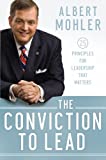
Al Mohler in his inimitable swashbuckling style leads us deep into the heart of the leader to examine and establish his basic convictions from which everything else flows.

2. The Shepherd Leader by Timothy Wittmer
A theological and practical exploration of the primary biblical model of leadership - shepherding. If you want to bless your pastor and elders, buy them this book.

3. Spiritual Leadership by J. Oswald Sanders

Definitely the most “spiritual” of the books on the list with a constant emphasis on the inner life of the leader. It’s also one of the most comprehensive books with 22 short chapters covering a wide range of leadership issues.

4. What’s Best Next by Matt Perman

A unique book in that it looks at productivity, time management, workflow, and vocation from the Christian perspective of good works for the glory of God.

5. The Book on Leadership by John Macarthur

A good basic textbook that is ideal for those just starting out on pastoral ministry and who are looking for a biblical basis for their calling and practice. Based largely on the life of the Apostle Paul with exegesis of numerous passages from Acts and the Epistles.

6. Leadership Handbook of Management and Administration

It’s a pity this book is only available for the Kindle, although you can still pick up used copies. It’s a unique kind of reference manual for the day to day administration involved in running a church. Multiple contributors with a high quality of content throughout.

7. You Lift Me Up: Overcoming Ministry Challenges by Al Martin

This book is Al Martin at his best, as he identifies three ministry challenges – ministerial backsliding, ministerial burnout, and credibility washout – and proposes various preventative and curative measures.

8. Spurgeon on Leadership by Larry J. Michael

A distillation of Spurgeon’s teaching on leadership as well as many biographical sections demonstrating how Spurgeon put his principles into practice.

9. The Steward Leader by R. Scott Rodin
Scott Rodin recovers one of the lost models of biblical leadership. He wants to instill stewardship as a mindset, as a worldview, but has many good sections on how this works out practically too.

10. Biblical Eldership by Alexander Strauch,

An outstanding book that has revolutionized the way many churches are run by demonstrating from the Bible the necessity of governance by a plurality of elders. Explains innumerable Bible texts on leadership.

Honorable Mentions

You need to read some of these with more discernment than the Top 10.

The Mentor Leader by Tony Dungy.

The Cross and Christian Ministry: Leadership Lessons From 1 Corinthians by Don Carson.

The Making of a Christian Leader by Ted Engstrom.

Building Leaders by Aubrey Malphurs.

Spiritual Leadership: Moving People on to God’s Agenda by Henry and Richard Blackaby.

Lead Like Jesus by Ken Blanchard and Phil Hodges.

Now you decide, what are your favorites? You can cast three votes and write a book in “Other” if it’s not on the list and I’ll add it to Reader Suggestions below. Click on “View Results” to see voting results.

Reader Suggestions

The Heart of a Servant Leader: Letters from Jack Miller

Christian Reflections on The Leadership Challenge

Top 10 Books For Dads

As I’m often asked for book recommendations on various subjects, I decided to put together an online list of my top ten books in various categories. Basically, if I was only allowed 10 books in my library on that subject, these are the ten I would choose. Previous posts include:

With “Father’s Day” just round the corner, I’m listing the Top 10 Books for Dads. After this list you’ll find a poll where you can cast three votes for your favorite books in this category. Click on “View Results” to see what books are most popular.

You can also add any book not on the list by writing the title in “Other” or in the Comments I’ll add these to the end of the post under “Reader Suggestions.”

1. The Masculine Mandate: God’s Calling to Men by Richard Phillips.

This is by far my favorite book on biblical manhood (don’t be put off by the cover)> It’s not exhaustive but covers all the bases like marriage, parenting, work, church, friendship, etc. Especially good for young men setting out on life.

2. The Meaning of Marriage: Facing the Complexities of Commitment with the Wisdom of God by Tim Keller.

We have to have one book dedicated to marriage on the list, and what better choice than Keller’s marriage transforming book. Nothing has influenced my own marriage in recent years more than this book.

3. The Shepherd Leader at Home by Timothy Witmer

Witmer applies the leadership principles of his popular book on church leadership, Shepherd Leader, to the home front.

4. Parenting by God’s Promises by Joel Beeke.

This book achieves that rare biblical balance of combining the huge responsibility God lays upon parents together with the huge encouragement God gives to faithful parents about their children.

5. Every Good Endeavor: Connecting Your Work to God’s Work by Tim Keller.

An excellent foundation to a lifetime of work that makes me wish I was a teenager again. A perfect companion volume would by God at Work: Your Christian Vocation in All of Life by Gene Veith. A new book on work, productivity, and getting things done is What’s Best Next: How the Gospel Transforms the Way You Get Things Done by Matt Perman.

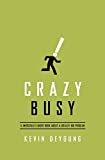
6. Crazy Busy: A (Mercifully) Short Book about a (Really) Big Problem by Kevin DeYoung.

Most Dads are. So if you want to slow Dad down a bit, this book should do the trick.

7. Conviction to Lead, The: 25 Principles for Leadership That Matters by Al Mohler

The values, principles, convictions and practices of a proven Christian leader.

8. What Every Man Wishes His Father Had Told Him by Byron Yawn

This is not just a book for men who had no fathers or poor fathers. It’s a book for all men, and especially for fathers who want to raise their sons to be men of God. Easy to read with lots of biblical teaching and common sense advice. I haven’t read it, but I noticed there’s a companion volume What Every Woman Wishes Her Father Had Told Her.

9. God, Marriage, and Family (Second Edition): Rebuilding the Biblical Foundation by Andreas Kostenberger.

It’s a big book that you will find useful to have on your shelves as a reference book on a range of current cultural issues such as birth control, homosexuality, singleness, re-marriage, etc.

10. Recovering Biblical Manhood and Womanhood: A Response to Evangelical Feminism by John Piper & Wayne Grudem.

Like #9, this is another substantial and demanding book on the list. The go-to book for the complementarian position (i.e. that God has made men and women differently and with different roles to complement each other). One for serious and disciplined readers.

Honorable Mentions

What’s the Difference? Manhood and Womanhood Defined According to the Bible by John Piper

A Guide To Biblical Manhood by Randy Stinson and Dan Dumas

Manhood Restored: How the Gospel Makes Men Whole by Eric Mason

Father Hunger: Why God Calls Men to Love and Lead Their Families by Douglas Wilson

What He Must Be: …If He Wants to Marry My Daughter by Voddie Baucham

Now you decide, what are your favorites? You can cast three votes and write a book in “Other” if it’s not on the list and I’ll add it to Reader Suggestions below.

Reader Suggestions

What would you add to the list and why?

Date Your Wife by Justin Buzzard

Future Men by Douglas Wilson.

Anchor Man: How a Father Can Anchor His Family in Christ for the Next 100 Years by Steve Farrar.

Point Man: How a Man Can Lead His Family by Steve Farrar.

Top 10 Leadership Books

As I’m often asked for book recommendations on various subjects, I decided to put together an online list of my top ten books in various categories. Basically, if I was only allowed 10 books in my library on that subject, these are the ten I would choose. Other posts include:

Today I’m listing the Top 10 Books on Leadership. Although not specifically Christian books, when read through the spectacles of the Bible you can read these books with great profit for every leadership role, including pastoral ministry. I’ll follow up with a separate list of books on Christian leadership.

These are the books I encourage my teenage sons to read to set them up for maximum usefulness in their homes, workplaces, and the church.

You may also want to see the leadership resources here:

After this Top 10 list you’ll find a poll where you can cast three votes for your favorite books and help others choose the best books on the subject. Click on “View Results” to see what books are most popular.

You can also add any book not on the list by writing the title in “Other” or in the Comments I’ll add these to the end of the post under “Reader Suggestions.”

1. Getting Things Done: The Art of Stress-Free Productivity by Dave Allen.

Still the go-to book for organizing to-do lists and maximizing time-management. You’ll probably not implement all the details of Allen’s system, but you’ll learn principles and practices that you can apply to whatever role you are in - from homemaker to pastor to house-builder to CEO.

2. The 7 Habits of Highly Effective People: Powerful Lessons in Personal Change by Steven Covey.

I re-read this book quite regularly and always learn something new from it. Covey starts with personal management before moving on to personnel management, character before conduct and contact - a vital order.

3. The Effective Executive by Peter Drucker.

Some overlap with Getting Things Done, but simpler and more focused on decision-making.

4. Necessary Endings: The Employees, Businesses, and Relationships That All of Us Have to Give Up in Order to Move Forward by Henry Cloud.

Deals with the unpleasant but vital area of letting people (and plans) go when they are not working out. Some outstanding advice on how to decide who and what is working out or not. Takes a persuasive positive approach by arguing the benefits to everyone of “necessary endings.” I previously summarized chapter 7 in this book in Wise or Foolish? One Simple Test. See also Cloud’s Boundaries: When To Say Yes, How to Say No

5. Digital Leader: 5 Simple Keys to Success and Influence by Erik Qualman

So important for anyone with any leadership role to understand the powerful influence of using digital technology well. Heres A Digital Dictionary For Leaders and 10 Digital Commandments I gleaned from this book.

6. The Happiness Advantage: The Seven Principles of Positive Psychology That Fuel Success and Performance at Work by Shawn Achor.

Might seem like an odd choice for a list of books on leadership, but Shawn Achor makes a compelling (and entertaining) scientific and statistical case for the productivity of happiness.

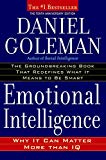
7. Emotional Intelligence by Daniel Goleman.

So important when interacting with and managing other people. Way more important than IQ, and most encouragingly can be developed and grown. See also Goleman’s Focus: The Hidden Driver of Excellence.

8. Making Ideas Happen: Overcoming the Obstacles Between Vision and Reality by Scott Belsky.

So many churches could do with a good dose of this book. We usually have plenty of visionaries and dreamers, but how to get there….? This book is about execution, execution, execution.

9. Organizing from the Inside Out: The Foolproof System For Organizing Your Home, Your Office and Your Life by Julie Morgenstern.

This book is about managing your space, your desk, your office, your files, etc. Time Management from the Inside Out (also by Morgenstern), applies the same principles to managing and organizing time. And her Never Check Email In The Morning takes a closer look at managing email.

10. View From the Top: An Inside Look at How People in Power See and Shape the World by D. Michael Lindsay.

This book is the result of a remarkable 10-year study of 550 top American leaders from all walks of life. It provides a wealth of fascinating statistics, a treasure trove of personal anecdotes, and some priceless quotations from well-known leaders. I was astounded by the access granted to Lindsay and by what he was able to draw out of his normally hyper-cautious interviewees. If you want to know how the most influential people in our culture got there, and how they think and operate, you will love and and profit from this book.
Now you decide, what are your favorites? You can cast three votes and write a book in “Other” if it’s not on the list and I’ll add it to Reader Suggestions below.

Reader Suggestions

What would you add to the list and why?

Leadership and Self-Deception: Getting out of the Box

50 Good Reasons to Sleep Longer

In an article headlined The Arrogance of Ignoring Our Need for Sleep leading scientists have warned of the supreme arrogance of trying to do without sufficient sleep. We are sleeping between one and two hours less per night than people did 60 or so years ago and it’s having a devastating impact upon every part of our lives.

Over the last few months I’ve been collecting research about the dangers of too little sleep, which I’ve summarized below. Once you’ve read that, you’ll probably want to pre-order Adrian Reynolds’ much-needed new book: And So to Bed: A Biblical View of Sleep (might be the best $6 you’ve spent this year!). Also check out 10 Reasons Why We’re Sleeping So Badly.

Physical Consequences

  • Just one week of sleeping fewer than six hours a night results in changes to more than 700 genes.
  • Just one night of sleep deprivation is linked with signs of brain tissue loss.
  • Infection-fighting antibodies and cells are reduced during periods when we don’t get enough sleep.
  • Sleeping fewer than seven hours a night is associated with a tripled risk of coming down with a cold.
  • Sleep loss increases hunger, portion size, and preference for high-calorie, high-carb foods, with the resulting risk of obesity.
  • Chronic sleep deprivation (less than 6 hours a night) is associated with:
    • Skin aging
    • 4 x stroke risk for middle- and older-aged people
    • 50% higher risk of colorectal cancers, and some links with other cancers too
    • High blood pressure
    • 48% higher chance of developing or dying from heart disease
    • Lower fertility rates.

Sport Consequences

More and more elite athletes are increasing sleep and even hiring sleep coaches in order to improve performance. The reasons are obvious

  • Chronic sleep loss can lead to a 30-40% reduction in glucose metabolism.
  • Sleep loss means a 11% reduction in time to exhaustion.
  • 2 days of sleep restriction can lead to 3x increase in lapses of attention and reactivity.
  • Maximum bench press drops 20 lbs after 4 days of restricted sleep.
  • Rested tennis players get a 42% boost in hitting accuracy during depth drills.
  • Sleep improves split-second decision-making ability by 4.3%.
  • Sleep extension provides swimmers a 17% improvement in reaction time off the starting block.
  • Football players drop 0.1 s off their 40-yard dash times by sleeping more.

This isn’t just a theory - consider the average sleep time of top athletes: Roger Federer: 11-12 hours per night; Usain Bolt: 8-10 h; Lebron James: 12 h; Michelle Wie: 10-12 h; Rafael Nadal: 8-9 h; Tiger Woods: 4-5 h (might explain a lot!)

Athlete Quotes

  • I think sleep is just as important as diet and exercise (Grant Hill)
  • Sleep is half my training (Jarrod Shoemaker)
  • If I don’t sleep 11-12 hours a day, it’s not right (Roger Federer)
  • A well-rested body is a healthier, more efficient, more capable one. This could be the hardest thing to accomplish on my to-do list, but it always makes a difference (Kerri Walsh).
  • Sleep is extremely important to me – I need to rest and recover in order for the training I do to be absorbed by my body (Usain Bolt).

Intellectual Consequences

  • Sleep flushes dangerous proteins from your brain, improving mental health. “When you’re sleep deprived, you get a dirty brain.”
  • Sleep allows the brain to consolidate and store the day’s memories.
  • Being exhausted zaps your focus, and can render you more forgetful.
  • Chronic sleep deprivation in adolescents diminishes the brain’s ability to learn new information,

Emotional Consequences

  • Sleep loss produces apathy, irritability, weepiness, impatience, anger, flattened responses.
  • Sleep loss can cause psychological damage because sleep regulates the brain’s flow of epinephrine, dopamine, and serotonin, chemicals closely associated with mood and behavior.
  • People with insomnia are 10x as likely to develop depression and 17x as likely to have significant anxiety.
  • The lack of sleep affects the teenage brain in similar ways to the adult brain, only more so. and can lead to emotional issues like depression and aggression.
  • In one study by researchers at Columbia University, teens who went to bed at 10 p.m. or earlier were less likely to suffer from depression or suicidal thoughts than those who regularly stayed awake well after midnight.

Societal Consequences

Getting sleep is an act of loving your neighbor by keeping the 6th commandment.

  • Sleep is increasingly recognized as important to public health, with sleep insufficiency linked to motor vehicle crashes, industrial disasters, and medical and other occupational errors.
  • Getting six or fewer hours of sleep triples your risk of drowsy driving-related accidents.
  • Just one bad night’s sleep can affect a driver’s eye-steering coordination.
  • The Cognitive Impairment that results from being awake for 24 hours is higher than the drunk drive limit in all states.
  • According to the NHSA, falling asleep while driving is responsible for at least 100,000 crashes, 71,000 injuries and 1,550 deaths each year in the United States.
  • Young people in their teens and twenties are involved in more than half of the fall-asleep crashes on the nation’s highways each year.
  • The Exxon Valdez, Challenger Space Shuttle, and Metro North Train tragedies in New York were all linked to sleep-deprivation.

Financial Consequences

  • Undermines creativity, problem-solving ability, and productivity.
  • Estimated to cost American businesses $63 billion a year.
  • The worst costs arise from the fact that sleep deprivation causes safety lapses and contributes to other health issues.
  • Other people (customers/clients) are likely to register a sleep-deprived person as lacking energy and unhealthy.
  • 32 billion dollars a year spent on meds, mattresses, candles, sleep consultants, etc.

Educational Consequence

  • 60 percent of grade school and high school children report that they are tired during the daytime and 15 percent of them admitting to falling asleep in class.
  • Sleep deprivation is such a serious disruption that lessons have to be pitched at a lower level to accommodate sleep-starved learners.
  • The United States has the highest number of sleep-deprived students, with 73% of 9 and 10-year-olds and 80% of 13 and 14-year-olds identified by their teachers as being adversely affected.
  • In literacy tests 76% of 9 and 10-year-olds were lacking sleep.
  • Children who have more sleep achieve higher in maths, science and reading.

Moral Consequences

  • A lack of sleep robs the fuel for self-control from the region of the brain responsible for self-control, whereas sleep restores it.
  • Studies found that a lack of sleep led to high levels of unethical behavior.
  • In tests, there was a difference of only about 22 minutes of sleep between those who cheated and those who did not.
  • A lack of sleep leads to deviant behavior at work (like falsifying receipts), similarly because of decrements in self-control.

In The Gulag Archipelago, Alexander Solzhenitsyn lists sleeplessness as one of 31 methods that his captors used to break a prisoner’s will. He wrote: “Sleeplessness befogs the reason, undermines the will, and the human being ceases to be himself, to be his own ‘I,’”

Spiritual Consequences

D.A. Carson wrote:

Doubt may be fostered by sleep deprivation. If you keep burning the candle at both ends, sooner or later you will indulge in more and more mean cynicism—and the line between cynicism and doubt is a very thin one….If you are among those who become nasty, cynical, or even full of doubt when you are missing your sleep, you are morally obligated to try to get the sleep you need. We are whole, complicated beings; our physical existence is tied to our spiritual well-being, to our mental outlook, to our relationships with others, including our relationship with God. Sometimes the godliest thing you can do in the universe is get a good night’s sleep—not pray all night, but sleep. I’m certainly not denying that there may be a place for praying all night; I’m merely insisting that in the normal course of things, spiritual discipline obligates you get the sleep your body need. (Scandalous, 147)

Ministry Consequences

An aside from John Piper’s 1995 lecture on Charles Spurgeon:

A personal word to you younger men. I am finishing my 15th year at Bethlehem and I just celebrated my 49th birthday. I have watched my body and my soul with some care over these years and noticed some changes. They are partly owing to changing circumstances, but much is owning to a changing constitution. One, I cannot eat as much without gaining unhelpful weight. My body does not metabolize the same way it used to.

Another is that I am emotionally less resilient when I lose sleep. There were early days when I would work without regard to sleep and feel energized and motivated. In the last seven or eight years my threshold for despondency is much lower. For me, adequate sleep is not a mater of staying healthy. It is a matter of staying in the ministry. It is irrational that my future should look bleaker when I get four or five hours sleep several nights in a row. But that is irrelevant. Those are the facts. And I must live within the limits of facts. I commend sufficient sleep to you, for the sake of your proper assessment of God and his promises.

Think you might need this book?

See also 10 Reasons Why We’re Sleeping So Badly.

Check out

4 Ways Pride Can Destroy A Team
L. J. Rittenhouse can predict the future performance of a company based on the frequency of “I” in the shareholder letters. An “I” leader is a leader who is going to lead the organization downward over time.

Three Things To Consider About Multi-Culturalism
A diversity of cultures within the local church is a gift because it reflects the family of God.

Top 10 Causes of Depression In Pastors
Marc Rutland: “That is the big ten as I have observed them, not in some distant, statistical study, but up close and personal. I know I am not unique or even rare in this experience. I have occasionally struggled with depression, more circumstantial than clinical though not altogether, throughout my forty-six years of ministry.”

Six Ways You Can Help Families Facing Autism
It doesn’t take being around a family with an autistic child very long to make your heart ache to know something,anything you can do to help. The good news is, there are six practical things you can do.

“Mom, You Are The Real MVP”
This is well worth watching the whole way through. But if you’ve only got a few minutes, watch the first 30 secs and then go to 4.58.

Top 10 Books For Moms

As I’m often asked for book recommendations on various subjects, I decided to put together an online list of my top ten books in various categories. Basically, if I was only allowed 10 books in my library on that subject, these are the ten I would choose. Other posts include:

With “Mother’s Day” just round the corner, I’m listing the Top 10 Books for Moms. I’ve read most of these, but one or two are on the list on the basis of reliable recommendations and social media surveys. Of course, most of the Top 10 Biographies of Christian Women could also be on this list, but I’ve decided not to overlap.

After this list you’ll find a poll where you can cast three votes for your favorite books in this category. Click on “View Results” to see what books are most popular.

You can also add any book not on the list by writing the title in “Other” or in the Comments I’ll add these to the end of the post under “Reader Suggestions.”

1. True Woman 101: Divine Design: An Eight-Week Study on Biblical Womanhood by Nancy Leigh Demoss and Mary Kassian.

As the title says, an 8-week course on womanhood, ideally for a small group. Counter-cultural yet truly liberating.

2. The Meaning of Marriage: Facing the Complexities of Commitment with the Wisdom of God by Tim Keller.

We have to have one book dedicated to marriage on the list, and what better choice than Keller’s marriage transforming book. Nothing has influenced my own marriage in recent years more than this book.

3. Parenting by God’s Promises by Joel Beeke.

This book achieves that rare biblical balance of combining the huge responsibility God lays upon parents together with the huge encouragement God gives to faithful parents about their children.

4. Glimpses of Grace: Treasuring the Gospel in Your Home by Gloria Furman.

You’ll be amazed at how Gloria Furman brings the Gospel into every part of everyday life. And then you’ll start doing it yourself. See also Gloria’s follow-up volume of daily devotions, Treasuring Christ When Your Hands Are Full: Gospel Meditations for Busy Moms. And if Daily Devotions is your thing, then you’ll enjoy Seasons of the Heart: A Year of Devotions from One Generation of Women to Another compiled by Donna Kelderman.

5. Housewife Theologian: How the Gospel Interrupts the Ordinary by Aimee Bird.

Similar in genre to Gloria Furman’s books, this one will make moms value and love their work more and, more importantly, value and love their God more.

6. Lies Women Believe: And the Truth That Sets Them Free by Nancy Leigh Demoss.

In this book Nancy highlights a number of lies that many Christian women have embraced about themselves, about God, about marriage, and others. But she not only exposes them, she also uses God’s truth to smash these chains and set captives free.

7. True Beauty by Carolyn Mahaney and Nicole Whitacre

The most recent publication on the list, it inspires women to aspire to the beauty of godliness. It’s one for daughters too, as is Girls Gone Wise in a World Gone Wild by Mary Kassian.

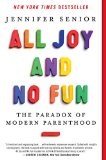
8. All Joy and No Fun: The Paradox of Modern Parenthood by Jennifer Senior

The only non-Christian book on the list but an enjoyable and informative read about the numerous ways the parent-child relationship has changed in our culture. It’s fascinating to see even secular voices being raised against the child-centered and child-driven families that our culture is creating.

9. God, Marriage, and Family (Second Edition): Rebuilding the Biblical Foundation by Andreas Kostenberger.

Probably the most comprehensive book on the list. It’s a big book that you will find useful to have on your shelves as a reference book on a range of current cultural issues such as birth control, homosexuality, singleness, re-marriage, etc.

10. Recovering Biblical Manhood and Womanhood: A Response to Evangelical Feminism by John Piper & Wayne Grudem.

Like #9, this is another substantial and demanding book on the list. The go-to book for the complementarian position (i.e. that God has made men and women differently and with different roles to complement each other). One for serious and disciplined readers.

Now you decide, what are your favorites? You can cast three votes and add a book if it’s not in the list.

Honorable Mentions

Tending Your Garden: Wisdom for Keepers at Home by Denise Sproul.

Let Me Be a Woman by Elisabeth Elliot

Life in Jesus: A Memoir of Mary Winslow by Octavius Winslow.

Fit to Burst: Abundance, Mayhem, and the Joys of Motherhood by Rachel Jankovic.

Reader Suggestions

A Mother’s Heart: A Look at Values, Vision, and Character for the Christian Mother by Jean Fleming.

Mother by Kathleen Norris.

Confessions by Augustine (for the role of a praying mother).

Because He Loves Me: How Christ Transforms Our Daily Life by Elyse Fitzpatrick.