New Books in the PRTS Library

One of the privileges of working at PRTS is the weekly arrival of new books to supplement our library of 70,000+ books. Here are the new picks this week.
March 10

Note: Inclusion in the library does not necessarily mean endorsement of contents. We often have to buy books to help students with specialist theses and also to train students to think critically. Also, a book new to the library does not necessarily mean a new book on the market.



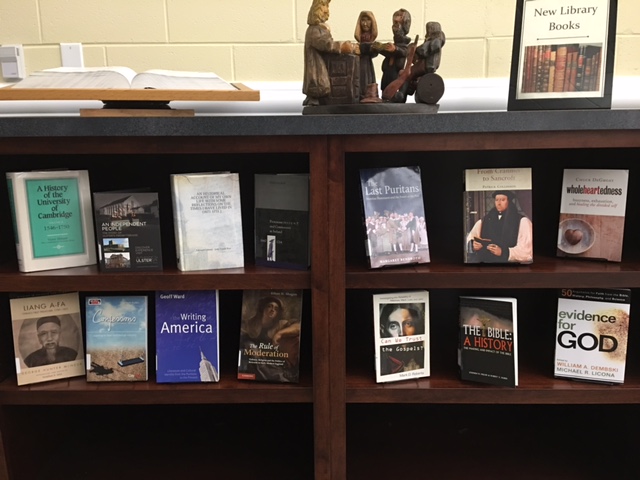
A History of the University of Cambridge: Volume 2, 1546-1750 by Victor Morgan

“This volume brings to completion the four-volume series, a vital contribution to academic history. Special features of this volume relate it to social and political history-especially to the gentry who provided patronage and recruits, as well as the royal court and parliament. The history of the university features extensive material on its architectural heritage, and a chapter on such intellectual giants between 1660-1740 as Richard Bentley and Isaac Newton.”
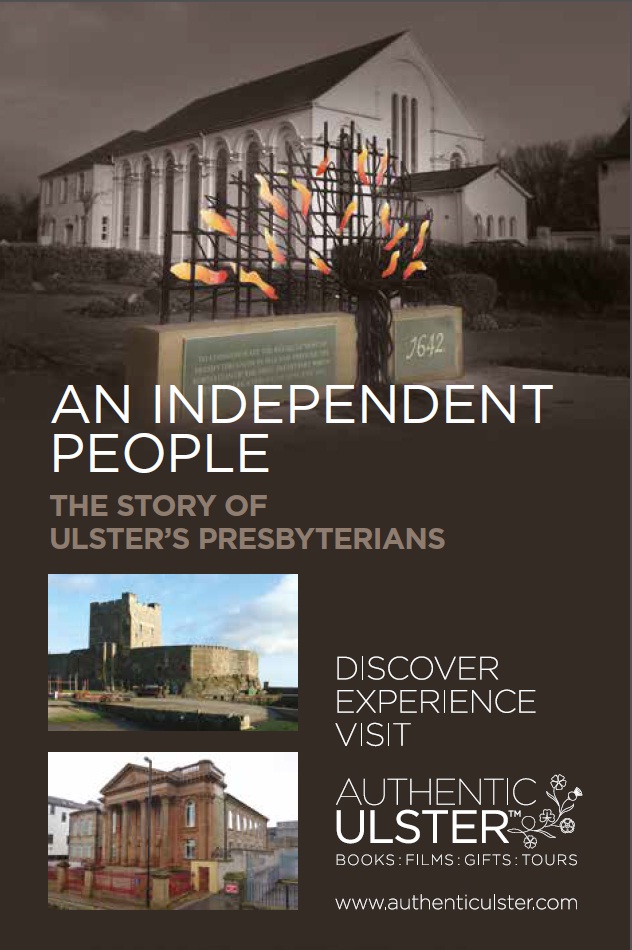


An Independent People: The Story of Ulster’s Presbyterians (DVD)


An Historical Account of My Own Life, With Some Reflections on the Times I Have Lived in. (1671-1731.) by Edmund Calamy
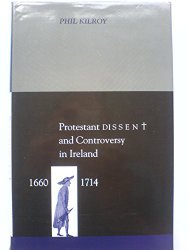


Protestant Dissent and Controversy in Ireland, 1660-1714 by Phil Kilroy


The Last Puritans: Mainline Protestants and the Power of the Past by Margaret Bendroth

“Congregationalists, the oldest group of American Protestants, are the heirs of New England’s first founders. While they were key characters in the story of early American history, from Plymouth Rock and the founding of Harvard and Yale to the Revolutionary War, their luster and numbers have faded. But Margaret Bendroth’s critical history of Congregationalism over the past two centuries reveals how the denomination is essential for understanding mainline Protestantism in the making.”
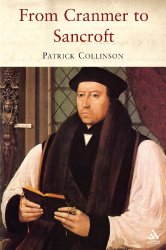


From Cranmer to Sancroft: Essays on English Religion in the Sixteenth and Seventeenth Centuries by Patrick Collinson

“This collection of essays ranges from Thomas Cranmer, who was burnt at the stake after repeated recantations in 1556, to William Sancroft, the only other post-Reformation archbishop of Canterbury to have been deprived of office. Patrick Collinson’s work explores the complex interactions between the inclusive and exclusive tendencies in English Protestantism, focusing both on famous figures, such as John Foxe and Richard Hooker, and on the individual reactions of lesser figures to the religious challenges of the time.”


Wholeheartedness: Busyness, Exhaustion, and Healing the Divided Self by Chuck DeGroat

“We all feel that nasty pull to and fro, the frantic busyness that exhausts us and threatens to undo us. And we all think we know the solution — more downtime, more relaxation, more rest. And we’re all wrong. As DeGroat himself has discovered, the real solution to what pulls us apart is wholeheartedness, a way of living and being that can transform us from the inside out. And that’s what readers of this book will discover too.”


Liang A-Fa: China’s First Preacher by George Hunter McNeur

“Liang Fa holds a unique place in the history of Christianity in China. Baptized and ordained by the first Protestant missionaries to China, Liang aided the first two generations of missionaries and conducted his own work as an evangelist and writer… and his most famous tract is believed to have influenced the Taiping Rebellion.”


Confessions of a Childless Mother: Learning to Trust God Through Infertility by Sarah Fuller

“This book is written by someone who knows first-hand the grief of infertility. It is a truly honest account of her and her husband s struggles with all the painful aspects of this trial. Including testimonies from many others about how they too have grappled with the issues, this book above all encourages readers in the midst of their pain to find peace in God and His Word.”


Writing of America: Literature and Cultural Identity from the Puritans to the Present by Geoff Ward

“In this lively and provocative study, Geoff Ward puts forward the bold claim that the founding documents of American identity are essentially literary. America was invented, not discovered, and it remains in thrall to the myth of an earthly Paradise. This is Paradise, and American ideology imprisons as it inspires.”


The Rule of Moderation: Violence, Religion and the Politics of Restraint in Early Modern England by Ethan H. Shagan

“…The Rule of Moderation comprehensively rewrites the history of early modern England, showing that many of its key developments-the via media of Anglicanism, the rise of the ‘middle sort’, the idea of political liberty, the development of empire, the rise of religious toleration-were defined and defended as instances of coercive and aggressive moderation, producing the ‘middle way’ through the forcible restraint of apparently dangerous excesses in Church, state and society.”


Can We Trust the Gospels?: Investigating the Reliability of Matthew, Mark, Luke, and John by Mark D. Roberts

“Attacks on the historical reliability of the Gospels—especially their portrayal of Jesus Christ—are nothing new. But are these attacks legitimate? Is there reason to doubt the accuracy of the Gospels? By examining and refuting some of the most common criticisms of the Gospels, author Mark D. Roberts explains why we can indeed trust the Gospels, nearly two millennia after they were written.”


The Bible: A History: The Making and Impact of the Bible by Stephen M. Miller and Robert V. Huber

“The history of one of the world’s most influential books, from its makings, through its development, to its impact through the ages…”


Evidence for God: 50 Arguments for Faith from the Bible, History, Philosophy, and Science edited by Michael Licona and William A. Dembski

“Leading apologists and biblical scholars offer accessible answers to both traditional questions and contemporary apologetics issues of our day.”

Check Out

Blogs

Too Sexy for This Selfie | Interview by Rachel Marie Stone, ChristianityToday.com
“Nancy Jo Sales’ new book, American Girls: Social Media and the Secret Lives of Teenagers, grew out of a set of troubling questions like mine: How did social media become so sexualized? Why do women and girls get harassed so much online? Why are girls posing like porn stars in selfies?”

Ken Myers: Cultural heart attack | Interview by Marvin Olasky, World Magazine
“Four years ago you suffered a heart attack that, doctors say, only 4 percent of sufferers survive. Since the Patrick Henry College students here, like all 20-year-olds, see themselves as immortal, could you talk a bit about that close encounter with mortality?”

James Durham on Ministerial Qualifications (2) | Donald John Maclean, Meet the Puritans
“But an understanding of the truths of scripture itself would be useless to a minister, unless they also possessed the ability to communicate those truths. Thus there had to be giftedness to ‘express and bring forth, for the edification of others, what they had conceived themselves.’”

Scientific paper which says the human hand was designed by a ‘Creator’ sparks controversy | Doug Bolton, The Independent
“A recent scientific paper on the movement of the human hand has faced strong criticism for referring to a ‘Creator’ throughout.”

Hope for the Unhappy Christian | Phillip Holmes, Desiring God
“The Christian’s unhappiness, discontentment, and the way we view God are directly linked.”

Defending Boys in a “Girl Power” Age | Heather Wilhelm, RealClearPolitics
“Unfortunately, in its earnest quest for female empowerment, America—never quite good at moderation, and always quite good at fighting the last battle—is quietly and methodically marginalizing boys. Every day, through various media campaigns, America’s boys absorb countless messages that girls can do anything—and that they deserve our unending attention and adoration. When it comes to boys, however, the cacophony of ‘dream big’ media encouragement falls oddly silent. The assumption, one supposes, is that the giant, sinister swath of oppressive male ‘privilege,’ supposedly inherited by young boys, speaks for itself.”

New Book

image006
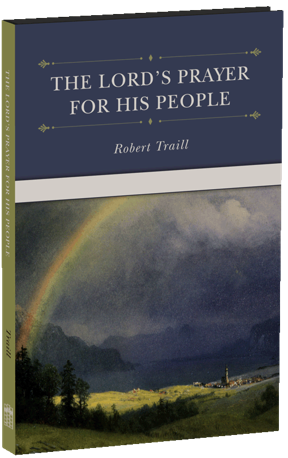
The Lord’s Prayer for His People by Robert Traill

Kindle Books

Couple of relaxing “weekend” books for you first of all.


This Is NPR: The First Forty Years ($2.99)


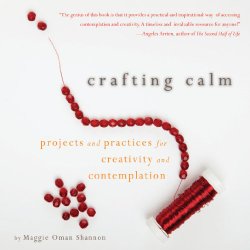
Crafting Calm: Projects and Practices for Creativity and Contemplation by Maggie Oman Shannon ($1.99)


The Gospels and Acts (The Holman Apologetics Commentary on the Bible) ($2.99)


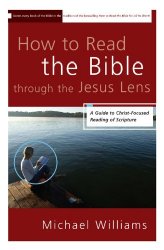
How to Read the Bible through the Jesus Lens: A Guide to Christ-Focused Reading of Scripture by Michael Williams ($3.99)


Preacher’s Checklist: Exegeting the Text

So far we’ve looked at the Preacher’s Checklist for selecting a text and for introducing a sermon. Today, I want to offer a checklist for exegeting a text.

1. Have I explained the historical background and canonical context?

2. Have I taken account of the genre of the passage?

3. Have I explained who wrote the text, when, why, and to whom?

4. Have I distinguished between what is central and what is peripheral?

5. Have I shown the connections between the text and the previous verses?

6. Have I explained every significant word in the text? (the most common area of failure)

7. Have I incorporated relevant Scripture cross-references?

8. Have I connected the passage with systematic theology, biblical theology, and Christology?

9. Have I checked my exegesis with reliable commentators?

10. Where is the Gospel in this text?

Bibliography

Here are my Top 10 Books on Preaching. And if you want to read more about how to exegete a text, here are the relevant passages in various preaching books.

Jay Adams, Preaching with Purpose, pp. 27-33.
D. L. Akin, Text-Driven Preaching, 135-218.
J A. Broadus, The Preparation and Delivery of Sermons, pp. 32-75.
Bryan Chapell, Christ-Centered Preaching, pp. 59-128.
H. B. Charles, On Preaching, pp. 58-67.
R. L. Dabney, Sacred Rhetoric or a Course of Lectures on Preaching, pp. 74-104, 154-167, 179-213.
Mark Dever, Preach, pp. 107-108.
Mark Dever, The Westminster Directory of Public Worship, pp. 94-96.
T. D. Gordon, Why Johnny can’t Preach, pp. 43-60.
S. Greidanus, Modern Preacher and the Ancient Text, pp. 48-121, 188-337.
D. R. Helm, Expositional Preaching, pp. 39-60.
D. Kistler, Feed my Sheep, pp. 61-128.
C. W. Koller, Expository Preaching Without Notes, pp. 28-33, 61-75.
D. M. Lloyd-Jones, Preaching and Preachers, pp. 45-63.
Sam Logan, The Preacher and Preaching, pp. 192-272.
John MacArthur, Preaching: How to Preach Biblically, pp. 93-135, 171-182.
John Macarthur, Rediscovering Expository Preaching, pp. 119-224.
J. C. Meyer, Preaching: A Biblical Theology, pp. 257-279.
C. Miller, Preaching: The Art of Narrative Exposition, pp. 61-77, 125-172.
Al Mohler, He is not Silent, pp. 65-75.
A. Motyer, Preaching: Simple Teaching on Simply Preaching, pp. 29-88.
David Murray, How Sermons Work, pp. 35-58.
Denis Prutow, So Pastor, What’s Your Point, pp. 61-70.
Haddon. W. Robinson, Biblical Preaching, pp. 57-114.
S. W. Smith, Dying To Preach, pp. 63-76, 113-135.
C. H. Spurgeon, Lectures to my Students, pp. 97-109.
John Stott, Between Two Worlds, pp. 213-227.


Check out

Blog

What if you’re not as awesome as you think you are? | Denny Burk
“We are by nature prone to excuse our own shortcomings, to overlook them, or even to justify them. The result is that we walk around with a self-regard that often exceeds reality.”

35 Totally Random Life Hacks | Scribblepreach.com
Funny, intriguing, inspiring, convicting.

The Importance of the Little Things by Nicholas Batzig | Ligonier Ministries Blog
“It’s the little things that members of a church or church plant do that help the ministry thrive and without which the growth of the local church would be greatly hindered.”

How I Optimize My iPhone for Maximum Productivity - Michael Hyatt
“Today I use my iPhone to keep track of most of the moving parts of my complicated personal and professional life. And I’ve optimized my home screen to put everything I need within one or two clicks. Here’s a list of the apps I currently have on my home screen:”

Limitless Grace for Limited Leaders | For The Church
“So why am I nervous to admit that I can’t do everything that needs to be done? I think it’s simple. I am afraid to to confess that I have limits. I’m afraid to admit that I have God-allotted periods and boundaries of my dwelling place (Acts 17:26). And I’m afraid that will render me unimportant.”

Hobbies to the Glory of God | Tim Challies
Tim takes away false guilt about having hobbies

“I believe God is pleased when we pursue hobbies. I also believe that we can confidently pursue them and do them for the glory of God even if there is no obviously redeeming value in them. “

These Are The Highest Paying Jobs In The U.S. For 2016 | Fast Company
But money’s not enough for satisfaction:

There’s no doubt that pay is among the leading factors most job seekers weigh when determining where to work, Chamberlain, says. However, our research shows that a big paycheck isn’t necessarily tied to long-term satisfaction in your job….When we dig deeper into what keeps employees satisfied once they’re in a job and with a company, we find that culture and values, career opportunities, and trust in senior leadership are the biggest drivers of employee satisfaction.”

Kindle Books

Paul Meets Muhammad: A Christian-Muslim Debate on the Resurrection by Michael Licona $1.99.

The End of Christianity by William Dembski $2.99.

And an intriguing book from Buzz Aldrin.

Mission to Mars: My Vision for Space Exploration by Buzz Aldrin $2.99.

Video

E.Y. Mullins Lectures | Southern Seminary
Videos of Mark Dever’s lectures on preaching at Southern Seminary. The first one below and here are the others.


Preacher’s Checklist: Introducing a Sermon

Following up on yesterday’s post about teaching beginning preachers, here’s my second checklist for beginning (and not-so-beginning) preachers on introducing a sermon.

1. Is it too long/too short? (Too long is by far the most common problem)

2. Does it contain no more than one thought/idea? (second most common problem)

3. Are you showing off your learning or trying to be sensational?

4. Is the introduction connected/relevant to the sermon?

5. Does the introduction connect with your hearers? Does it draw them into the sermon?

6. Does it give hearers a reason to listen to the sermon?

7. Does it steal the sermon’s thunder? In other words, is there sermon material in the introduction?

8. Is it apologetic and hesitant rather than authoritative and declarative?

9. Is it unnecessarily offensive?

10. Is it sufficiently varied when compared with your other sermon introductions?

Bibliography

Here are my Top 10 Books on Preaching. And if you want to read more about how to introduce a sermon, here are the relevant passages in various preaching books.

Jay Adams. Preaching with Purpose, pp. 59-64.
J A. Broadus. The Preparation and Delivery of Sermons, pp. 266-275.
Bryan Chapell, Christ-Centered Preaching, pp. 237-268.
H. B. Charles, On Preaching, pp. 73-82.
R. L. Dabney, Sacred Rhetoric or a Course of Lectures on Preaching, pp. 137-153.
Mark Dever, Preach, pp. 102-106.
Mark Dever, The Westminster Directory of Public Worship, pp. 93-94.
C. W. Koller, Expository Preaching Without Notes, pp. 77-78.
John MacArthur, Preaching: How to Preach Biblically, pp. 201-204, 243.
John Macarthur, Rediscovering Expository Preaching, pp. 242-247.
David Murray, How Sermons Work, pp. 71-84.
Denis Prutow, So Pastor, What’s Your Point, pp. 171-180.
Haddon. W. Robinson, Biblical Preaching, pp. 159-174.
John Stott, Between Two Worlds, pp. 243-253.


Check Out

TGC Asks: 3 Books Every Church Planter Should Read | Matt Smethurst, TGC
“I asked 20 church leaders what three books every planter should read and why.”

How I Prepare a Sermon | JOETHORN.net
“I’ve been preaching for over 20 years. Over those two decades my approach to preparation and and my preaching has changed, and I continue to work on it. Continued growth is needed in this area since it is such a major part of my calling. But my basic method at this point have been in play for a while now and enough of you have asked me to share how I prepare a sermon. So, here it is.”

10 Marks of an Immature Believer | Mike Leake, Borrowed Light
“In his little book, Grace: The Truth, Growth, and Different Degrees, Christopher Love, gives ten marks of an immature believer. He does this not to shame but in order to spur on towards growth in Christ.”

12 Bible Verses Every Leader Needs to Memorize | Ron Edmondson
“The Psalmist said, ‘I have hidden your word in my heart so I might not sin against you.’ God’s Word can be a protection for our heart and soul. It can teach us, convict us, and challenge us. The same is true for leaders. The best leadership book is the Bible.”

Vocation of a fast food worker | Gene Veith, Patheos
“Like a lot of people in this economy, my former student Stephen Williams is “underemployed” right now. But he understands the doctrine of vocation. Read his account of how working in a fast food joint is charged with spiritual significance and gives him occasion to love and serve his neighbors.”

Is Our Media Consumption Hindering Our Pursuit of Holiness? | Jessica Schaeffer, Institute for Faith, Work, and Economics
“…consuming media inherently entails a moral status. The very act of choosing one activity over another has direct moral implications. ”

The 7 Key Mindset Changes for Shifting from Passive Idleness to Active Readiness | Brett and Kate McKay, The Art of Manliness
“The 7 key mindset changes that will enable you to move from the path of least resistance to the road less taken - from passive idleness to active readiness.”

Why Millennial Women Are Burning Out | Kelly Clay, Fast Company
“The trend of young women burning out by the age of 30 is very real and unfortunately common.”

New Book

The Passionate Preaching of Martyn Lloyd-Jones

New from Steven Lawson and Reformation Trust
“In The Passionate Preaching of Martyn Lloyd-Jones, the latest addition to the Long Line of Godly Men series, Dr. Steven J. Lawson introduces us to the life and ministry of a trained physician who sensed an irresistible call to preach. Surrounded by theological liberalism, Lloyd-Jones began a pulpit ministry that would exert profound influence on both sides of the Atlantic.”

Kindle Deals


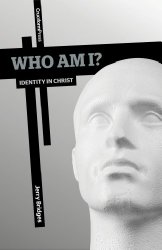
Who Am I? Identity In Christ by Jerry Bridges ($1.99)


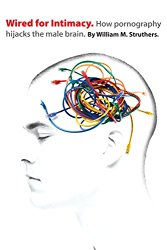
Wired for Intimacy: How Pornography Hijacks the Male Brain by William M. Struthers ($2.99)


How to Read the Bible through the Jesus Lens: A Guide to Christ-Focused Reading of Scripture by Michael Williams ($3.99)


The New Matthew Henry Commentary: The Classic Work with Updated Language edited by Martin H. Manser ($3.99)

Video

How stress affects your brain – TED-Ed – Madhumita Murgia