As I’m often asked for book recommendations on various subjects, I decided to put together an online list of my top ten books in various categories. Basically, if I was only allowed 10 books in my library on that subject, these are the ten I would choose. Previous posts include:
Today we’re looking at Top 10 Books for Youth Groups. This list was supplied by PRTS graduate Russell Herman, who has had a lot of experience in teaching teens, and also in leading church youth groups in book studies. He wanted me to say that these are not in any order of preference, and that his comments on each book are to help churches and youth leaders to see if it matches the youth they are working with.
As I’m often asked for book recommendations on various subjects, I decided to put together an online list of my top ten books in various categories. Basically, if I was only allowed 10 books in my library on that subject, these are the ten I would choose. Previous posts include:
Today I’m listing Top 10(ish) Gospel Books for Children. I put this question out on my Facebook page last week after a friend asked me for recommendations for their eight-year-old who was showing interest in the gospel. Here are my favorite responses - this time not in any order of preference. Please make further suggestions in the comments and I’ll add them under Reader Suggestions.
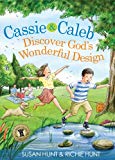
Julie suggested books by Susan Hunt, saying, “My children really enjoy these and they are practical.” One of Hunt’s newest for children is Cassie & Caleb Discover God’s Wonderful Design.
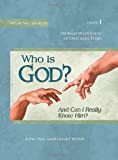
Who Is God? (And Can I Really Know Him?) by John Hay and David Webb. This one is often used as a homeschooling textbook and the publishers also offer a journal and coloring book to go along with the text. Recommended by Colin.
Jesus Teaches Us How to Be Wise by Sinclair Ferguson, part of a series of “Jesus Teaches Us How to…” books. Recommended by David
A Young Person’s Guide to Knowing God by Patricia St. John. Recommended by Amian and Angela. Amian said: “Patricia was a writer of the old school. My daughter (now 38) always says ‘No-one understood children and young people like Auntie Patricia’. The Gospel is very clearly set out in all of her children’s books.” Angela remarked, “…Patricia St John’s books are brilliant, gentle but clear in their message and engaging for children.”
Fair Sunshine: Character Studies of the Scottish Covenanters by Jock Purves. Recommended by Isobel who enjoyed them as a child. She said, “When I was that age and seeking, I found the lives of missionaries fascinating and the stories of the covenanters challenging.”
Jungle Doctor and the Whirlwind (Jungle Doctor Series Book 1) by Paul White. The whole Jungle Doctor series was recommended on my Facebook page. Angela said, “[This series has] an excellent way of communicating the way of salvation and gospel truths to children of this age.” and Isobel remembered them from her childhood, “So glad you can still get the Jungle Doctor series, they were my favs over fifty years ago!”
I like to read a book about the Bible every year. Although I’m often reading what I already know, I still find it deeply beneficial to regularly remind myself what the Bible really is, how it came to be, and how I should read and interpret it. That’s especially true in a day when the Bible and the doctrine of Scripture is under such sustained attack from outside and inside the church. I don’t want to shift one inch from the rock solid foundation of an infallible, inerrant, authoritative Bible.
My latest load of ballast comes in Sinclair Ferguson’s new book, From The Mouth of God: Trusting, Reading, and Applying the Bible. For the multitudes who already know and love Sinclair, that’s probably all you need to know. Sinclair Ferguson has a new book out…right, where can I buy it? It’s like an instinct now isn’t it! So much so, that we can almost hear his much-loved voice as we read his written pages.
But there are others, especially younger readers, who are maybe not so familiar with Sinclair Ferguson. He doesn’t blog, he doesn’t Tweet, and he doesn’t do Facebook. I mean, does he really exist?
Well, I can vouch for his existence. Yes, believe it or not, there is real life outside virtual life. In fact, maybe this book might demonstrate to you what deep thought and beautiful writing can be produced by an unfrazzled mind and a prayerful spirit.
There are four parts to the book:
Part One - Trusting the Bible This section covers the usual subjects considered in any doctrine of Scripture - inspiration, inerrancy, authority, canon, perspicuity, sufficiency, etc. But don’t let any of these words put you off, because Sinclair explains them all in such a simple conversational manner that most teens could understand them. It might be tempting to skip this section and go straight to the more “practical” chapters. However, if you succumb, please come back to these important chapters. Unless we know, understand, teach, and defend the doctrine of Scripture, we’re not going to have any Scripture left to practice.
Part Two - Reading the Bible This section on Bible interpretation starts with some warnings about common traps to avoid, and then puts five valuable keys of interpretation into our hands together with examples of how to turn these keys to open up the Bible’s treasures. This fifth chapter and especially the third key could transform the way you read and understand the Bible.
Chapters six and seven show how to apply these keys to different kinds of Scripture - history, poetry, prophecy, the epistles, the Gospels, etc. In a few short pages you’ll pick up many precious nuggets that have been refined over forty years of pastoral ministry. Chapter nine demonstrates how to pull and put it all together to interpret the book of Ruth. And that’s the huge strength of this book - its practicality. Sinclair doesn’t just toss you the keys and say, “All the best.” He puts his hand on yours, guides you to the lock, helps you to turn it in the right way, opens the door, and guides you around the precious treasure.
Part Three - Applying the Bible The third section lays the basis for application, proving that the Bible calls for more than bigger brains, before briefly proposing some basic guidelines for applying the Bible to our times and lives.
Appendices In addition to a guide for future reading and a Bible reading plan, there are two articles on guidance by John Murray and John Newton.
Conclusion
A good book for young people and young Christians, probably after they’ve read Kevin DeYoung’s even simpler and briefer Taking God at His Word. A great book for everyone else. No matter how mature you are, it will increase your love for and confidence in the Bible, as well as give you some invaluable keys to help you understand and apply it better.
For me, I’m still living off the first two pages of the introduction, where Sinclair briefly expanded upon his choice of title, From the Mouth of God. The Bible is the mouth of God. Pause. Pause longer. Repeat. The Bible is the mouth of God. That totally changes the way I open it, read it, and hear it. I hope it will do the same for you.
As I’m often asked for book recommendations on various subjects, I decided to put together an online list of my top ten books in various categories.
If you click on the title of each Top 10, it will take you to brief descriptions of each book, other good books just outside the Top 10, reader suggestions, and reader polls on each category.
As I’m often asked for book recommendations on various subjects, I decided to put together an online list of my top ten books in various categories. Basically, if I was only allowed 10 books in my library on that subject, these are the ten I would choose. Other posts include:
After my list you’ll find a poll where you can cast three votes for your favorite books and help others choose the best books on the subject. Click on “View Results” to see what books are most popular. You can also add any book not on the list by writing the title in “Other.”
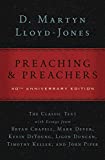
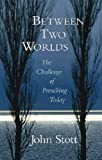
What a difference it would make to the church if this book was modeled more widely. As the title suggest it is not just about sermons, but about those who preach them – the message and the man. This edition is interspersed with valuable commentary by contemporary preachers like Logon Duncan and Mark Dever.
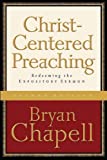
If I was just starting out in preaching, this would be my first purchase. It will anchor your sermons in the text and focus them on Christ. Key insight is the FCF (Fallen Condition Focus).
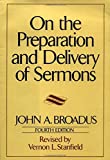
Good material on the theology of preaching, and good arguments to overcome objections to preaching. Especially good on identifying “The Dominant Thought” of the preaching passage. Also strong on application, but if I was looking for something on application alone, I would choose Truth Applied by Jay Adams.
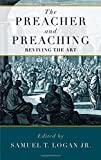
As is common with multiple authorship, some chapters overlap and some are a little weak but this is the most comprehensive book on preaching on this list.
My favorites chapter are Exegesis by Sinclair Ferguson and Sermon Structure and Flow by Glen Knecht. Gwyn Walters’ chapter on The Body in the Pulpit is also fascinating.
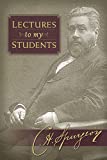
A bit verbose, but a treasure trove of classic homiletic teaching. Some of it dated, but much-needed “old-fashioned” emphasis on the privilege and dignity of the office of preacher.
Hope you’ll forgive me for including this – in my defense, I put it in at #10! Probably the simplest and most practical of the bunch. A good starter or refresher.
Now you decide, what are your favorites? You can cast three votes and add a book if it’s not in the list.
Honorable mentions
If I’d had a Top Twenty the following books would also have been included.
The Imperative of Preaching by John Carrick. Explains the four “moods” of preaching : The indicative, the exclamative, the interrogative, and the imperative, with the emphasis of the book being on the imperative.
The Supremacy of God in Preaching by John Piper. More focused on the subject of preaching than the method. But if this book doesn’t put fire in your belly, nothing will.
The Christian Ministryby Charles Bridges. Covers much more than preaching but still worth it for the preaching material alone.
Preach: Theology Meets Practice by Mark Dever and Greg Gilbert. 40 pages on the theology of preaching, 70 on the practice, and another 60 of sample sermons where the principle and the practice come together.
Dying to Preach: Embracing the Cross in the Pulpit by Steven W. Smith. His basic thesis is that the nature of our message should impact the way we present and communicate our message. Those who preach a crucified Christ should preach in a crucified style. And even though it is more about style than substance, the whole book is an argument for an absence of style, or, rather, a crucified style.
How To Preach Without Notes by Charles Koller. More specialized, but even if you don’t get to note-less, it will encourage less dependence on notes.
The Modern Preacher and the Ancient Text by Sidney Greidanus. A bit more technical but also many practical helps to bridge the gap between the time and culture of when the Bible was written and our own day.
Preaching to a Post-Everything World by Zack Eswine. This and the following book are the two best books on preaching that have been published in the last couple of years. Contemporary, challenging, and encouraging.
Saving Eutychus: How to Preach God’s Word and Keep People Awakeby Gary Millar and Phil Campbell. A call for more imagination, creativity, and feeling in preaching. Given the aim (less sleepy hearers), I was surprised at the continued commitment to full manuscript in the pulpit.
How to Evaluate Sermonsby Joel Beeke. Although this focuses on the aftermath of preaching, it’s also a great checklist before preaching.
Yesterday the adult Sunday School at Grand Rapids Free Reformed Church started Derek Thomas’s new Ligonier video teaching series on Pilgrim’s Progress. Since I started pastoring there in July, we’ve worked our way through The Peacemaker by Ken Sande and Resisting Gossip by Matthew Mitchell - both great books for laying a foundation of biblical conduct in areas that often cause so many problems in churches. However, we fancied a change from a book study and also wanted to move on to something a bit more positive and encouraging than trouble-shooting and problem-solving.
When I saw the Pilgrim’s Progress series, I knew immediately it would fit the bill. The video lessons are 20-25 minutes long and come with an excellent lecture outline and study guide, which makes for a perfect 40-minute Sunday school class format. That it was taught by Derek Thomas was the icing on the cake. As we watched yesterday morning, I was reminded again of why I’ve increasingly thought that Derek is one of the master teachers of our generation. Here are ten “teaching tips” that I picked up from watching Derek teach:
1. Relax: A tense teacher makes for a tense classroom. But uptight and stressed is not Derek’s style. He’s so laid-back and relaxed you feel he’s chatting to you round the fire more than lecturing in a classroom. He is so easy, enjoyable, and, yes, even entertaining to listen to.
2. Warm up: Unlike many American speakers who spring off the starting blocks like Usain Bolt, British speakers often take a while to get going. Derek takes even longer than most. Of course he could go faster, but he chooses to go more slowly at first in order to warm up his hearers and bring them along with him. He doesn’t want to give his hearers brain cramp.
3. Slow down: Derek doesn’t just start slow, he stays slow. Yes, his pace picks up as he goes on, but he never gets into motormouth territory. He makes the deliberate choice to cut down the number of words he will say in order to make the words he does say linger and stick. In a day that values quantity over quality, that takes great faith! Sinclair Ferguson and R.C. Sproul are also good examples of this.
4. Connect: Derek communicates affection and even love for his students. You get the clear impression that he actually likes the people he is teaching. They are not just automatons or statistics to him, but real people. You see this in his expressions and you hear it in his voice, but he also makes a couple of remarks to indicate that he’s observed who’s in front of him and that he’s tailoring his teaching to them.
5. Mix it up: He reads the book, expounds the book, critiques the book, explains the historical context, tells Bunyan’s life-story, asks questions, teaches theological principles, applies lessons to current times, and so on, seamlessly moving from one teaching tactic to another.
6. Tease: In a couple of places he hints at what lies in store down the road. By whetting the tastebuds and heightening anticipation he’s persuading people that their sacrifice of time will be worth it and that their perseverance in the course will pay off.
7. Lighten up: The lectern is not the same as the pulpit, and teaching from Pilgrim’s Progress is not the same as preaching God’s Word. Therefore the little sides and dashes of subtle humor are appropriate and even enhancing. Vitally, the humor never veers into the amateur stand-up comedy routine that has become so common and so tiresome.
8. Motivate: Derek raises the stakes right at the beginning of the lecture by explaining the historical importance of the Pilgrim’s Progress and by highlighting the danger of this present generation losing the book altogether. He is essentially calling his students to be “keepers of the flame,” to keep this important book alive in their homes and churches for years to come. Quite a calling!
9. Enthusiasm: I remember one teacher I had who clearly hated his job. One day he came into class, threw his jacket off, pulled his tie down, exhaled a sigh and groaned, “As I was driving in this morning, I was thinking, ‘Only 28 years of this to go!’” Inspiring! Not. Derek is such a contrast to this. His evident love for Bunyan and Pilgrim’s Progress is contagious and compelling.
10. Eye-contact: Few things bug me more than teachers who just stand at the front of a class, eyes down, reading notes word for word. Just give me the notes if you’re going to do that. I can read them better and faster than you. But though Derek is following notes, he’s not bound to them, maximizing eye-contact as much as possible throughout. It’s lively, “human,” and engaging.
I could go on, but you can watch the first lesson below and learn not just from what Derek teaches but also from how he teaches.