Endtimes Q&A

A month or so ago I made available my first ebook How Sermons Work. My second ebook, Endtimes Q&A (download pdf here) is an expanded version of “The Four (Main) Millennial Views,” which I presented today at the 2010 Philadelphia Conference on Reformed Theology in Grand Rapids.

In the interests of clarity, precision, simplicity and brevity, the material is presented in question and answer (or “catechism”) format.

I’ve used pictures to illustrate and highlight many points. The link between text and picture is not always obvious, but will be all the more memorable if you can work it out!

Proof texts are kept to a minimum, and those I have used are placed in the footnotes to avoid clutter. Many other eschatology books will give you all the necessary scriptural references.

As this is only an introduction to the four main millennial views, I have kept things brief. I have also focused on the mainstream of each view rather than all the variations within each.

Although I have tried to fairly represent the four main millennial views as well as setting out the strengths and weaknesses of each, I am biased toward amillennialism. My original address was somewhat tilted in favor of amillennialism. This ebook is more obviously tilted in that direction. However, whatever your millennial view, I hope that Endtimes Q&A will help you to understand the alternatives better. If I have misrepresented any of the millennial views, I will gladly receive correction.

I am working on an expanded version of this ebook which will deal with the full range of eschatological subjects: death, intermediate state, final judgment, heaven, hell, etc.

I’m very grateful to my research assistant, PRTS student Derek Naves, for his help with the four millennial timelines in my Keynote presentation. I hope to get these posted on this blog next week. Some of the icons Derek designed are on the front cover of the ebook.


Combo Final Opto.pdf
Download this file

Samuel and the Witch at Endor

I’m really enjoying the TGC series on interpreting difficult texts. I don’t always agree with the conclusions, but I always appreciate and learn from the way that the writers faithfully wrestle with the biblical text. The latest article on who the witch at Endor raised up comes to the conclusion that it was Samuel’s spirit.

Arguments for Samuel

The arguments for this being Samuel are quite strong:

1. The text states it was Samuel.

2. The medium was startled because it was not one of the evil spirits with whom she was used to dealing.

3. The spirit gives an accurate prophecy of what would happen to Saul the next day.

Arguments against Samuel

However, after studying this a number of years ago, I came to the conclusion that a stronger case can be made for this being an evil spirit impersonating Samuel (just as the devil can transform himself into an angel of light). Here are some of the points I remember from that study:

1. Witches cannot disturb good and glorified men and being them into the world again.

2. Would God permit Samuel to appear and answer Saul when He did not answer him by living prophets?

3. The spirit ascended out of the earth rather than descending from heaven.

4. The spirit accepted worship, which Samuel would not have done.

5. All that is told Saul (God is your enemy, David will be king) is told to exasperate him and drive him to despair, not to repentance.

6. The witch’s shocked reaction was because, like so many mediums, her work was usually a big con. But this time she sees a real spirit from the other side.

7. As Calvin said: “God sometimes gives to devils the power of revealing secrets to us, which they have learned from the Lord.”

8. The dead do not return but are impersonated by evil spirits (Eccl. 9:5,6; 2 Kings 2:9; Lk. 16:19f).

7 Reflections On The Scottish Referendum

The people of Scotland have spoken and said, “No thanks!”

Thus ends the latest Scottish rebellion at least for another generation.

And for one of the very few times in my life, the side I supported, albeit with some reluctance, has won an election. Pity I couldn’t actually vote.

And a first, one of my prophecies came true. In A Scottish View on Scottish Independence, I predicted that Scotland would vote “No” by a narrow margin. I thought it would be 5-7%, but it’s turned out to be nearer 10%.

So what does it all mean? A few reflections:

1. This has been a largely peaceful process. The days of Braveheart and Culloden are thankfully long past for Scotland. Ukraine, Iraq, and many other places are not so fortunate, as separatist (and unionist) movements continue to use to military means to advance their cause. There are no tanks or claymores on the streets of Edinburgh or Glasgow this morning.

2. This has been a surprising process. Surprising that the passionate Scottish nationalist movement came so close, but even more surprising perhaps was the passion and feeling stirred in the hearts of the Unionists. Many Scots were stunned at how much latent love for being British surfaced in our hearts. Scots who’d never waved a British flag in their lives found themselves wrapped in Union flags and singing “Land of Hope and Glory” and “Rule Britannia, Britannia rules the waves” with all the gusto of the English! We’ve shed surprising tears as we discovered deep strains of patriotism and came to value and treasure our shared and God-given history and heritage.

3. This has been a divisive process. With the whole referendum being about division, in some ways we should have expected polarization. But few expected such extreme polarization. Americans who have got so used to extreme partisan politics might be puzzled that this is a problem. “It’s politics, of course we hate the other side.” But that’s not the norm in the UK. Oh, sure the main party leaders feign hatred of each other, as here. But the general population usually just lets them get on with it, as they get on with their lives. Not this time. Families, neighbors, colleagues, Christians have turned against one another with a rarely seen enmity, that may take years to recover from.

4. This has been a heartbreaking process. The vote is over but hundreds of thousands of Scots are deeply depressed this morning with painful hearts that will take a long time to heal. The stunning 85% electoral participation was exceeded only by the unparalleled emotional investment that will be causing many emotional hangovers this morning. This was no ordinary election that people forget in a day or two; many staked their whole beings and many pounds and hours in this campaign. And today, as I look at photos and film of rain-soaked Scottish flags and Lion Rampants, and at the tear-stained faces of multitudes of heart-broken Yes-Scots, my eyes begin to water too. “Maybe they were right. Maybe we missed a golden opportunity.”

5. This has been an economic process. For all the passion and emotion of these weeks and months, the primary consideration has been money. Judging by most of the arguments, the vote really came down to which side would put a few more pounds in Scottish pockets. Spiritual considerations were ignored or belittled. Saddest of all, perhaps, was that neither side needed to take the church’s views or the Christian vote into account at all - too small, too insignificant. Thus Scotland’s headlong plunge into secularism, even intolerant persecuting secularism, continues apace, though probably slightly slower than if Scotland had voted for Independence.

6. This has been an entertaining process. There have been many moments of high-drama and many barn-storming speeches. Political reputations were made and destroyed. Some politicians rose to the occasion and others collapsed under the glare of TV lights and public scrutiny. Although election results usually disappoint me, I must say I just love watching the human drama play out as men and women strive to sway hearts and minds, as leaders are made and others are broken, as journalists skewer slippery interviewees, and as ordinary people rise up and speak.

7. This is a continuing process. One of the factors that swung the vote in the last few days was the UK leaders’ panic-induced promises of far greater powers to the Scottish parliament. That may have saved their skins, and the Union, but it’s also guaranteed continued political, constitutional, and economic upheaval for years to come. In his concession statement, the nationalist leader, Alex Salmond, has already called for these promises to be honored.

UPDATE: Let me add an eighth thought. This has been a world-watching moment. Scotland is rarely in the news, but has fairly enjoyed the world’s media spotlight the past week or so, especially as the opinion polls narrowed and the break-up of the United Kingdom seemed imminent. Many European nations looked on with alarm as separatist movements in various European countries recognized the momentum a Scottish “yes” vote would produce. Americans, including the President, weighed in on the eve of the vote, horrified at the potential impact on our “special relationship,” NATO, and world stability. Although I’m no fan of Gordon Brown, I think he was right to say that the UK is a good example to an increasingly divided and unstable world of how different nations and peoples can unite and work together for the common good. But it’s also an example of flexibility in devolving more powers in response to the democratic process.

These are the thoughts that come tumbling out of my heart and head this morning. Whether we are rejoicing or mourning this morning, surely this prayer for the revival of religion in Scotland is something all Christians can unite around.

A Scottish View on Scottish Independence

It’s been quite “interesting” over the past week to see various Americans weigh in on whether Scotland should remain in the United Kingdom or become an independent nation, with most American journalists and bloggers favoring the unionist status quo.

There was virtually no mention of Thursday’s vote until the last week or so when a couple of opinion polls showed a surge in support for independence, bringing both sides neck and neck. That probably has nothing to do with North Korea coming out in support of an independent Scotland!

As you have to be resident in Scotland to vote, I cannot participate. At first I was a bit miffed about that, especially because tens of thousands who have come to Scotland from other nations can vote, even if they are not Scottish citizens and even if they’ve only stayed there for a few days. However, as I’ve made my home in Grand Rapids for the past seven years, and hope to apply for American citizenship as soon as is legally possible, I can’t really complain about being voteless.

Spiritual Dimension
Having said that, I do still have strong spiritual ties to my homeland, and I’m deeply concerned about Scotland’s spiritual welfare. The spiritual dimension is rarely if ever mentioned in the increasingly heated debates. The deciding factor for the vast majority is purely economic - will union or independence put more money in my wallet? For others, the primary consideration is political power, the argument on the one side being that Scotland will have more political clout standing on its own. The other side argues that an independent Scotland will no longer have a voice at the top table of nations, and England will have a weakened voice too. And then there are those who are motivated by sheer hatred of the English, especially of English politicians, and others just want change, any change.

But for the diminishing number of Christians in Scotland, the biggest question is “How will it affect the Kingdom of God?” The church I used to be a pastor in has produced a report that attempts to explain the negative spiritual ramifications of independence. I’m not that impressed with the report, but it will give you an opportunity to see how some Christians are trying to think through the spiritual implications of Independence.

How would I vote?
So how would I vote if I was allowed to? Although I was a member of the Conservative party, the most strongly unionist party in the UK, and I even campaigned with Winston Churchill’s grandson in one utterly hopeless election, I must say I’ve been inclined towards independence at times, especially as I’ve seen the way Scotland is often sidelined and belittled by the English upper-class twits that seem to rule the roost in the Westminster Houses of Parliament.

However, I keep coming back to the spiritual implications and asking, “What would be best for the Kingdom of God?”

I agree with the Christians who argue that the evidence from the devolved Scottish parliament since its inception in 1999 is that Scottish politicians have tried to outdo and outpace their London counterparts in stripping Scotland of its Christian heritage and replacing it with a rabidly secular agenda. Yes, I’m ashamed to say, Scotland has led the way in the UK in legislating for gay rights, gay adoption, gay marriage, etc. Having said that, London has only been a step or two behind. So, whether Scotland stays in the union or votes for independence, I don’t see either arrangement making that much difference to Christians or the Church of Christ.

So, given these pros and cons, I would probably reluctantly vote NO to independence, mainly on the grounds, “Better the devil you know than the devil you don’t.” Also, from my understanding of biblical and non-biblical history, I don’t believe Christians should campaign or vote to upend the status quo of civil society without having extremely good moral reasons to do so. I’ve not been convinced that such reasons exist.

My Prediction
My prediction? I predict that Scotland will vote narrowly against independence, mainly on economic grounds, with enough fear-mongering having convinced enough people that independence will cost them too much money to take the risk.

I also predict that the current secularization of British society will continue apace north and south of the border, the gay rights movement will adopt an increasingly persecuting agenda, hate-crime legislation will be used to suppress criticism of all non-Christian religions, and radical Islam will increasingly threaten Christians and churches in many parts of the UK.

Unless God returns to Scotland in reviving and reforming power, I further predict the continued numerical decline of Scottish churches. Due to the devastating influence of the secular public school system in which 99% of Scottish kids are educated, the demographics of most Scottish churches looks disastrous. Of the small proportion of kids attending churches, the majority leave church in their mid-late teens. If you were to look out over many (most?) churches, you’d see a hugely disproportionate number of gray hairs, which can only mean the accelerated closure of multiple churches throughout the land in the next 10-15 years.

Of course, there will still be faithful churches that enjoy the blessing of God, especially if they do five things:

1. Maintain and strengthen the essential spiritual core of faithful biblical preaching and reverent biblical worship, with an emphasis on communicating and worshipping in modern language, “the vulgar language of every nation” as the Westminster Confession puts it.

2. Break out of the pervasive defensive posture and courageously evangelize, especially in populous and often dangerous inner-city areas.

3. Re-build a culture of Christian education, beginning with homeschooling, but aiming for Christian schools (of which there are only a tiny handful in the whole of Scotland).

4. Prayerfully depend on the Holy Spirit for blessing rather than importing and aping some of the worst of the North American church scene.

5. Stop fighting the ecclesiastical battles of the past. Over the years, there have been many church divisions in Scotland, some of them very necessary. But some Christians are still bitterly fighting the wars of the 20th and even the 19th century instead of opposing the current spiritual enemies that are overwhelming the land.

Although the majority of Americans have way too romantic ideas of Scotland and its current spiritual state, there are still godly and faithful ministers, Christians, and churches throughout Scotland. Yes, they are a tiny proportion of the population, but they are a praying people who continue to plead for revival and reformation.

Let’s all use this time of renewed focus on Scotland to prayerfully remember that historically much-blessed land, and to join with our brothers and sisters there in giving God no rest until He again establish Scotland as a praise in the earth (Isa. 62:7).
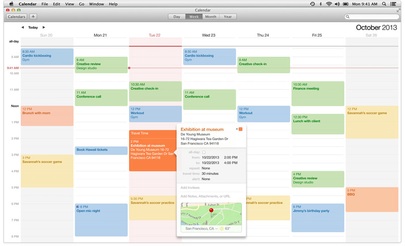
New Student Tip #6: Calendar

For most High Schoolers, Mom is their calendar. She keeps track of classes, school trips, holidays, doctor visits, swimming club, etc.

Then students go to college, and chaos ensues as Mom steps back. Students start forgetting classes, missing meetings, double-booking swimming and volleyball, running late for just about everything, and just being in a constant tizzy.

The answer is not the back of your hand or blizzards of post-it notes. The answer is a calendar, ideally a digital one.

OS_X_Calendar copy

There are multiple calendar apps and services out there, but the two standouts are Google calendar or Apple’s iCal for Mac users. Whatever you choose, make sure your calendar has the following features:

1. Cross-platform syncing. You need your calendar to sync across multiple devices so that you can enter events and access your calendar wherever you are and whatever device you’re working on - cellphone, Tablet, PC or laptop.

2. Notifications. When you enter an event you should usually set up a notification as well, so that the calendar will send you an email, a beep, or a buzz a specified number of minutes beforehand.

3. Year, Month, Week, and Day Views. Sometimes you need to drill down to a specific day to see what you are doing at 12 noon. Other times you need to see the week on one page to identify areas of over-scheduling or perhaps areas where you can schedule study time.

4. Color coding. You may want to assign color coding for different kinds of events - classes, sport, church, etc. You definitely want to color code study time so that you can see at a glance if you are allocating enough hours to assignments and exam prep.

5. Start and finish times. You need the facility to enter start and finish times so that it blocks off a visible portion of your calendar and you don’t schedule anything to begin before the previous event ends.

6. Location. Classes take place in different buildings. Games and competitions vary their venues. You want a calendar that lets you enter where as well as when.

7. Sharing. This is not a must-have, but eventually (we hope) you will have a significant other in your life and you’ll want (I hope) him or her to know where you are and when you are available. It’s therefore helpful to have the ability to share calendars. And if you’ve got nothing to hide (!) why not make it available to your parents too, so that they can schedule family events and trips with you.

Let me finish up with a few extra tips.

1. Enter the event as soon as you can. Don’t wait until later and hope you’ll remember to enter it and get all the details right. Just get into the habit of entering the data immediately.

2. Schedule everything. It’s tempting to just schedule classes and other events that you must attend. However, unless you schedule some of the more optional events - they probably won’t happen. For example, you should schedule blocks in your calendar for studying, for exercise, for friends.

3. Schedule margin. Don’t schedule events so close that you are always rushing from one thing to another. Estimate how long it will take you and then add some margin to allow for traffic, unplanned conversations, etc.

4. Use small blocks. The best studying gets done in large uninterrupted blocks of time. So, where you see these possibilities in your calendar, mark them down. Then you’ll see other bits and pieces - 30 minutes here, 40 minutes there - what should you do with them? These are valuable but easily wasted time slots. Without undermining what I said about allowing for margin, you may want to use some of these 20-30 minute blocks for the multiple small to-dos of each day like email, phone calls, errands, etc. Don’t shorten, interrupt, and waste substantial study time blocks with these little things.

5. Check your calendar. No point in going to all the bother of entering all that data and then not checking it. Don’t just rely on the beep or the buzz a few minutes beforehand. Every Saturday evening or Monday morning you should look at the week ahead and make sure you have a good sense of what’s planned. Then every evening, check for the next day’s events and plan accordingly.

6. Accountability. It’s a good idea to ask someone to look at your calendar from time to time to see if you are using time well. Ask someone who is well-organized and self-disciplined to take a look and offer advice.

Other Resources

New Student Tip #1: Dropbox

New Student Tip #2: Wunderlist

New Student Tip #3: Evernote

New Student Tip #4: Diigo

New Student Tip #5: Lastpass

Thriving at College by Alex Chediak (for students)

Preparing Your Teens For College by Alex Chediak (for parents of students)

Top 10 Books for Students

Some Cheap Weekend Reading For Kindles

I like to scour Amazon on Fridays for some cheap weekend reading, usually picking up a great book or two for a few bucks that I can read through in a few of hours.

As I spend my week reading Christian books for my teaching and preaching, I’m usually on the lookout for something a bit different, often a biography about someone I’d like to know more about, perhaps a popular history book, or maybe something on leadership/time management/study techniques. If I buy a duffer, well, it was only a couple of bucks. Some of the previous weeks’ books are still on offer (check lists here and here).

First up this week are a few of Ben Carson books at reduced prices, including one for kids.

Gifted Hands 20th Anniversary Edition: The Ben Carson Story ($3.74) by Ben Carson.

Remarkable biography of Ben Carson’s amazing rise from inner city poverty to international prominence as a surgeon and political campaigner.

Gifted Hands, Revised Kids Edition: The Ben Carson Story ($3.99) by Ben Carson.

My own children loved this kids version.

Think Big: Unleashing Your Potential for Excellence ($3.79) by Ben Carson

Ben Carson, at his motivational and inspiring best.

The Monuments Men: Allied Heroes, Nazi Thieves, and the Greatest Treasure Hunt in History ($3.99) by Robert Edsel.

This bestselling book focuses on the eleven-month period between D-Day and V-E Day, and follows six Monuments Men and their impossible mission to save the world’s great art from the Nazis.

Seabiscuit: An American Legend ($5.98) by Laura Hillenbrand.

Another New York Times Bestseller at greatly reduced price by the author of Unbroken (still available at $6.99).