10 Reasons God Stops Us In Our Tracks

I’m beginning to ease myself back into a few hours of work a day after my second experience of pulmonary emboli in three years. If you’re interested in what happened from a medical point of view, here’s an animated video.

Personally, I’m not that interested in the medical side of things. I’m much more concerned with the spiritual dimension. It’s been a sobering and solemnizing time in which I’ve been prayerfully trying to interpret this providence and hear God’s “voice” to me in it.

Basically God has stopped me in my tracks once again and I’ve been asking myself Why? Not at all in a rebellious way, but in a humble and teachable way. Did I miss or forget the lessons of three years ago? I’ve already had two strikes; I desperately don’t want a third.

I realize that the ultimate answer is something between God and I alone, but maybe you can offer some suggestions that I’ve not yet considered. Here are the options I’ve been mulling over - maybe it’s one of these, none of these, or all of these!

1. I’ve been on the wrong track and I need to turn around and get on God’s track.

2. I’ve been going too fast on the track and need to slow down.

3. I’ve been traveling on too many tracks at the one time and I need to trim my ministry activities.

4. I’ve been pulling too many carriages behind me and I need to share burdens and delegate better.

5. I’ve been traveling on the right track but on my own steam and I need to rely on God’s “steam” alone.

6. Someone else is on the wrong track and God is using me as a warning to them.

7. My engine needs some rest and repair in a siding for a while.

8. God is preparing me for another journey, but I cannot see it round the corner yet.

9. God wants to stop me from going over a cliff or some other danger ahead.

10. God wants to end my journey. Maybe God is saying, “48 years is all I’d planned for you David. Your journey is over.”

As I said, sobering and solemnizing.


No Greatness Without Goodness

One out of every five Americans has some disability. Seven percent of Americans have mental limitations or illnesses that interfere with their daily functioning. Only 16 percent of people with a severe disability such as deafness, legal blindness, intellectual disability, autism, or an inability to walk are employed. Twenty-seven percent live under the poverty level, compared with 9 percent of people without disabilities.

Randy Lewis, senior vice president of Walgreens is on a mission to change all these statistics and transform all these lives. You can read his story in a wonderful book called No Greatness without Goodness: How a Father’s Love Changed a Company and Sparked a Movement. The title is probably a play on Jim Collins’ bestselling business book, From Good To Great

Lewis’s experience of raising an autistic son gave him a huge heart for others with disabilities. Over many years this passion developed into a massive and remarkable vision to provide meaningful, well-paid, and full-time employment for men and women with disabilities.

Lewis builds his case not so much on compassion for the disabled but on profit margins. He demonstrated that employees with disabilities have four times less absenteeism, 75% lower turnover, up to 50% higher productivity, and much better teamwork.

He persuaded Walgreens to build the most efficient distribution center of its kind in the world and staff one-third of the workforce with people who have disabilities, many of whom had never been offered a job.

He insisted that they be paid exactly the same as people without disabilities and enjoy the full benefits of full-time employment.

He then opened Walgreens’ doors to the world, even to their competitors, to share everything they’d learned in this process.

10 Reasons to Read This Book

This was one of the books on my summer reading list and has turned out to be my favorite book of the year so far. As I want to motivate you to read it for yourself, here are 10 reasons to do so.

1. It will give you a greater love for the disabled and a greater appreciation of their gifts.

2. It will inspire you to fight for justice for the disabled and to include them much more in public life.

3. It will inspire those with disabilities, and especially their caregivers and supporters, that so much more can be accomplished than is often feared.

4. It will give you an insight into the burden of fear, anxiety, and exclusion that the families of the disabled live with.

5. It will demonstrate Christian faith tried in the furnace of affliction.

6. It will call the church to emulate and exceed Walgreens. After all, if a corporation can do it, how much more can and should the church.

7. It will challenge businesses and corporations to employ more people with disabilities – not just out of compassion but out of concern for profits!

8. It will teach you leadership principles. Each of the 40 or so short chapters end with a catchy saying, a proverb, that Lewis draws from His experiences. Many of these are pure gold.

9. It will make you cry, it will make you laugh, it will make you shout with joy!

10. It will make you realize how much one person can do with God’s blessing. When Lewis was hesitating at one point, his wife Kay shared the story of Esther with him:

“Perhaps you were made vice president for such a time as this.” Then, with absolute conviction in her voice, she said, “All the angels and the powers of heaven are standing behind you.”

No Greatness without Goodness: How a Father’s Love Changed a Company and Sparked a Movement by Randy Lewis.


“They’re back”

With these two words on Friday evening, the ER doctor soberly explained that I have blood clots in both my lungs again (Bilateral pulmonary embolism for the medically minded).

Just as it was three years ago, I was sitting comfortably at home with my family when a searing chest pain spread from my lower chest up to my neck with a suffocating sensation. Probably originated from a clot in my leg again, though this time there was no leg pain to warn me.

After a couple of days in hospital, I’m now home, stable, and on blood thinners to dissolve the clots and prevent further ones.

I’m taking some time off blogging and other public activities to rest, to spiritually process what’s happened, and to prayerfully discern God’s message to me in this painful yet merciful providence. This post is just to briefly explain my absence.

In my shock and confusion in the early hours of Saturday morning I opened YouVersion on my phone to find the verse for the day was Psalm 68v19:

Blessed be the Lord, Who daily loads us with benefits, The God of our salvation!

I then read verse 20.

Our God is the God of salvation; And to GOD the Lord belong escapes from death.

What more can I say?


8 Ways To Say “No!”


How many times have you said “Yes” to some request when every fiber in your being was screaming “NO, say NO!”

Yet, despite the volume of our inner voice, somehow “Yes” squeaks out.

Lots of times, eh? Yes, me too. There’s a verse about that, you know: “ But let your ‘Yes’ be ‘Yes,’ and your ‘No,’ ‘No’ (Matt. 5:37).

So how do we get better at ensuring our “Yes” actually means “Yes,” and how do we develop the skill and strength to just say “No” when that’s what we want to say and should say?

One of the main points in The Essentialist, The Disciplined Pursuit of Less, is learning the vital leadership skill of saying “No.” In our hyper-connected age, we have so many opportunities to do so many things, and so many invites, questions, and requests coming at us from so many sources, that we can spend our lives saying yes to everything and yet getting nothing really worthwhile done. McKweon says:

The point is to say no to the nonessentials so we can say yes to the things that really matter. It is to say no— frequently and  gracefully— to everything but what is truly vital.

But how to do that? Assuming we’ve got clarity on what is truly vital, how do we say no to the nonessentials?

Author Greg Mckeown says that like all abilities, saying “No” is difficult at first but we can grow more skillful at it with practice. He helpfully lists a “Repertoire of No’s” we can pick from and eventually master so that “we can handle almost any request from almost anybody with grace and dignity.”

1. The awkward pause: When a request comes to you, pause, count to three, and let the awkward silence do its own work.

2. The soft “no” (or the “no but”). “I can’t just now because of this project, but if you contact me again in a few weeks/months…”

3. “Let me check my calendar and get back to you.” Instead of rushing into a “yes” this gives you time to pause, reflect, and reply in a self-controlled manner.

4. Use e-mail bouncebacks. Use email autoresponses to gain extra time to think and decide in an objective way.

5. Say, “Yes. What should I deprioritize?” When saying yes is going to compromise your ability to make the highest level of contribution.

6. Say it with humor. For example, “I’ll do it, but only if you can supply the caffeine pills and Monster Energy cans.”

7. Use the words “You are welcome to X. I am willing to Y.” While conceding that you will do something smaller, you are also clearly communicating what you will not do.

8. “I can’t do it, but X might be interested.” Not just a stonewall, but offers another door to knock on.

To further motivate more “No’s in your life, think on these three quotes:

People are effective because they say “No.” – Peter Drucker

Half of the troubles of this life can be traced to saying yes too quickly and not saying no soon enough. – Josh Billings.

“No” is a complete sentence – Anne Lamott.

Essentialism: The Disciplined Pursuit of Less by Greg Mckeown.


Check out

32 Books On Worship
Thanks to Leon Brown for compiling this list.

Much-Needed Clarity on Sanctification
Neat summary of Derek Thomas’s recent address on the subject.

Pornolescence
Tim Challies: “So many young Christians have stunted their spiritual growth through what I callpornolesence. Pornolescence is that period when a person is old enough and mature enough to know that pornography is wrong and that it exacts a heavy price, but too immature or too apathetic to do anything about it.”

9 Differences Between Gospel Obedience and Legal Obedience
Andy Farmer turns to Samuel Bolton for some helpful practical distinctions.

It’s Never Too Late To Become A Great Dad
“He grew up in a dysfunctional family and bounced through the foster care system, an unlikely background for someone destined to lead an evangelical family-equipping organization. But that’s just where Jim Daly finds himself today, as the President and CEO of Focus on the Family. Daly’s first book, Finding Home, detailed his difficult childhood. His latest book, The Good Dad: Becoming the Father You Were Meant to Be, shows that a rough upbringing need not ruin one’s ambitions of leading a healthy family.”

Top 20 Christ-Centered Expository Preaching Checklist
Here’s a good article to print out and read over before preaching any sermon.

Navigating The Waters Of A Broken Life: My Abortion Story
Powerful, powerful, powerful.

Giant School of Sting Rays
Never knew they could fly as well.


An Essential Book on Essentialism

I’ve been blown away by one of the books on my summer reading listEssentialism: The Disciplined Pursuit of Less by Greg McKeown. It’s one of those “Where have you been all my life?” kind of books and it’s come at such an opportune time in my own life as I’ve just hired a virtual assistant, and I’m also deciding what to cut from my life in order to do less better.

That matches the basic value proposition of Essentialism: “Only once you give yourself permission to stop trying to do it all, to stop saying yes to everyone, can you make your highest contribution towards the things that really matter.”

Essentialism is not about how to get more things done; it’s about how to get the right things done. Especially in our interconnected world, there are far more activities and opportunities than we have time and resources to invest in. Many of these are good, even very good, but few are vital.
Two Ways Of Living

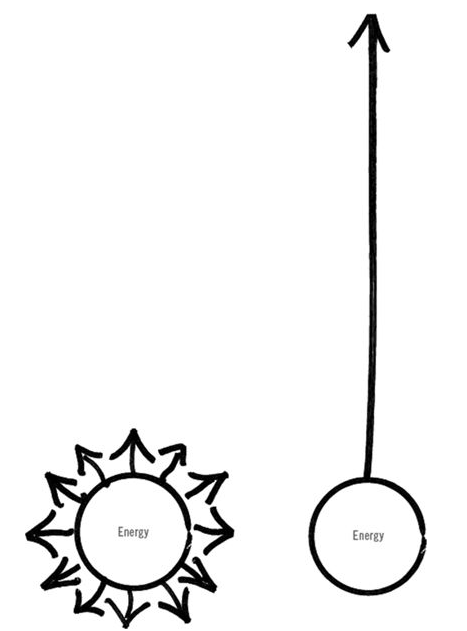
So what’s the essential difference between an essentialist and a non-essentialist? It can be summed up in this diagram.

In both images the same amount of effort is exerted. In the image on the left, the energy is divided into many different activities. The result is that we have the unfulfilling experience of making a millimeter of progress in a million directions. In the image on the right, the energy is given to fewer activities. The result is that by investing in fewer things we have the satisfying experience of making significant progress in the things that matter most.

The latter requires hard choices, discipline, and trade-offs. But, as McKeown says, “If you don’t prioritize your life, someone else will.” Or as Jim Collins found out in How The Mighty Fall, “the undisciplined pursuit of more” was a key reason for most corporate failures.

McKeown hardly needs to make the argument that the modern world has turned many of us into non-essentialists, but he traces this damaging trend to three factors:

1. Too many choices causing us to lose sight of the most important ones.

2. Technology and hyperconnectivity have increased the strength and number of outside social influences on our decisions.

3. The idea that we can do it all.

He underlines the necessity of fighting this trend with the story of hospice nurse Bronnie Ware who recorded her dying patients’ most common regret. At the top of the list: “I wish I’d had the courage to live a life true to myself, not the life others expected of me.”

To avoid such a sad end, “requires not just haphazardly saying no, but purposefully, deliberately, and strategically eliminating the nonessentials, and not just getting rid of the obvious time wasters, but cutting out some really good opportunities as well.”

And that’s where Essentialism excels as it presents a clear four-step process that begins with developing an essentialist mindset and takes you all the way through to execution.

1. ESSENCE: THE MINDSET OF AN ESSENTIALIST
There are three deeply entrenched assumptions we must conquer to live the way of the Essentialist: “I have to,” “It’s all important,” and “I can do both.” To embrace the essence of Essentialism requires we replace these false assumptions with three core truths: “I choose to,” “Only a few things really matter,” and “I can do anything but not everything.”

2. EXPLORE: DISCERNING THE TRIVIAL MANY FROM THE VITAL FEW
Essentialists systematically explore and evaluate a broad set of options before committing to any. Because they will commit and “go big” on one or two ideas or activities, they deliberately explore more options at first to ensure that they pick the right one later.

3. ELIMINATE: CUTTING OUT THE TRIVIAL MANY
The key to making our highest contribution may be to say “No.” The real question is not how can we do it all, it is who will get to choose what we do and don’t do.

4. EXECUTE: REMOVING OBSTACLES AND MAKING EXECUTION EFFORTLESS
Essentialists invest the time they have saved into creating a system for removing obstacles and making execution as easy as possible.

I do have some reservations about applying this rigidly to the Christian life and particularly to Christian ministry, partly because of the danger of developing a self-centered spirit, and partly because God can easily turn what seem to us to be trivial time-wasters into massive ministry opportunities and gains.

However, despite these cautions, I believe the vast majority of us would not only benefit spiritually from this book but also become more effective and fruitful in our various callings and ministries.

Essentialism: The Disciplined Pursuit of Less by Greg McKeown.