


Pastoral ministry like having a baby
Feb 15, 2010 • By David Murray • 0 Comments
If you want to know what having a baby is like, you could ask any mother…or any faithful Pastor. And before I’m clobbered for even daring to suggest a comparison, my authority is the apostle Paul, who wrote to the Galatians: “My little children, of whom I travail in birth again until Christ be formed in you…” (Gal. 4:19).
Paul had been the spiritual mother of the Galatians (Acts 13, 14). God had used him to turn the Galatians from “ceremony-salvation” to Gospel salvation, a painful and traumatic experience which he likened to having a baby. But just when Paul thought that the Galatians had been delivered from the suffocating womb of ritualism and were now breathing the pure life-giving oxygen of Christ’s grace, he discovers to his horror that they are reversing back up the birth canal, and turning back to circumcision and other ceremonies as a way of salvation. So Paul re-enters the labor suite and starts pushing them back to grace. In between the agonizing pangs, he can be heard whispering, “My little children, of whom I travail in birth until Christ be formed in you.” There are piercing contractions, baffling complications, stubborn obstructions, and constant resistance. But he won’t give up or give in until he sees Christ formed in them. He’s going to push and persevere and fight for their lives until they take the shape of Christ, until their whole being proclaims Christ, until they look like Christ, sound like Christ and live like Christ. As John Calvin said, “If ministers wish to do any good, let them labor to form Christ, not to form themselves, in their hearers.” Is it any wonder, pastors, that you feel so exhausted this Monday morning? You’ve been in the labor suite again. Indeed, do you ever leave it?The Connector of the Disconnected
Feb 13, 2010 • By David Murray • 1 Comment
In a week when more “Buzz” was added to our lives, I was relieved to read Seven Simple Ways to Disconnect. In summary:
1. Take a social network hiatus.
2. Ignore all calls.
3. Don’t check your email.
4. Spend a day in silence.
5. Refuse to buy anything.
6. Don’t use any electricity.
7. Don’t use transportation.
And, having disconnected, how about reconnecting…with the great Connector of the disconnected. “For thus saith the Lord GOD, the Holy One of Israel; In returning and rest shall ye be saved; in quietness and in confidence shall be your strength: and ye would not” (Isa. 30:15).
So why am I writing this? And why are you reading this?
You make the camera disappear!
Feb 12, 2010 • By David Murray • 0 Comments

What can pastors possibly learn from Larry King (apart from what to avoid)? John Baldoni argues here that King had a unique gift for getting people to talk about themselves by putting people at ease and asking the right questions.
Baldoni supports his argument with two illustrations from King’s relationship with Frank Sinatra. When King was a nobody he somehow managed to end up with Frank Sinatra on his show. But instead of following the usual interviewer’s strategy of trying to convince his audience that he and Sinatra were best buddies, his first question was, “Why are you here?” Baldoni writes:What King had done with Sinatra, as he has done with thousands of guests from the high and mighty to the people next door, is to shift focus from himself to the guest. This creates a sense of rapport that stimulates further conversation.
Many years later, when Larry King had become Larry King Live on CNN, Sinatra remarked to King during another interview, “You make the camera disappear.” “Bingo!” comments Baldoni, “A television conversation becomes just two people talking.”
I want to develop a similar ability as a pastor of souls. I want to make people feel so at ease that the “pastoral office” disappears and the conversation becomes just two sinners talking about Christ and the way of salvation. Perhaps the biggest compliment that could be paid after such a dialogue is, “I forgot you were a minister/pastor!”
101 Writing Tips
Feb 11, 2010 • By David Murray • 1 CommentHere’s a great short video on how to avoid the five biggest writing (and preaching?) blunders. In summary:
1. Don’t bury the big newsDon’t build long case up to climax. Hit them with the big news first. Get the key points across early. 2. Don’t use unnatural language.
Using fancy and showy language diverts attention to the medium or the messenger rather than the message 3. Don’t overuse nouns
Use verbs much more. Not, “It is our suggestion…” but, “We suggest.” 4. Use shorter sentences
Cut down on “and” and aim for an average of 15 word sentences (also short paras) 5. Don’t use passive voice
Start with the “actor” then the “action,” not vice versa. And if you really want to improve your writing (hence speaking) here is a great resource of 101 writing tips in a few pages. For this and three more free ebooks on writing visit Magneto.
Is Moses in heaven? How?
Feb 10, 2010 • By David Murray • 2 Comments
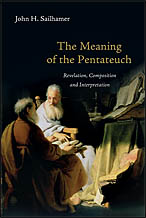
When a book is highly recommended by many respected preachers, bloggers, and authors, I am rarely disappointed. Hence my eagerness to read John Sailhamer’s widely-touted book, The Meaning of The Pentateuch. Imagine, then, my huge disappointment when I read in its opening pages the following sentences:
The Pentateuch is a lesson drawn from the lives of its two leading men, Abraham and Moses. The Pentateuch lays out two fundamentally dissimilar ways of “walking with God” (Deut. 29:1): one is to be like Moses under the Sinai law, and is called the “Sinai covenant”; the other, like that of Abraham (Gen.15:6), is by faith and apart from the law, and is called the “new covenant” (page 14).
I read the passage again and again, just to make sure I had not misunderstood. How can you write 600+ pages on the Pentateuch and go so wrong in such a fundamental way at the very outset? Sailhamer is saying that there were two ways to be saved in the Old Testament. Like Moses, you could be saved by obeying the law. Or, like Abraham, you could be saved by believing in the Gospel.
That leaves me with three possible conclusions. First, Moses is in hell, having tried and failed to be saved by keeping the law. Or, second, there are two groups of people in heaven who have been saved in totally opposite ways. There are those like Moses who were saved by the works of the law, and there are those like Abraham who were saved through faith in the Messiah. Hard to see how there can be much fellowship when some are praising themselves and others are praising Christ. The third possible conclusion is that Sailhamer is wrong.
I’m going to run with the third conclusion, as two groups of biblical texts spring quickly to mind. First, we have Christ’s infallible commentary on the “Meaning of the Pentateuch,” which is that it was all about Himself.
And beginning at Moses and all the prophets, he expounded unto them in all the scriptures the things concerning himself (Luke 24:20).
And he said unto them, These are the words which I spake unto you, while I was yet with you, that all things must be fulfilled, which were written in the law of Moses, and in the prophets, and in the psalms, concerning me (Luke 24:44).
If you believed Moses, you would believe me, for he wrote about me (John 5:46).
Jesus even presents the glorified Abraham as pointing sinners to Moses and the prophets for the way of salvation (Luke 16:29-31).
Second, we are told four times in Hebrews 11 (vs. 24, 27, 28, 29) that Moses walked by faith. In fact we are specifically told that he had saving faith in Christ (v.26).
Putting these two groups of texts together we must conclude not only that Moses wrote about Christ, but also that he believed in him for salvation. In other words, or in Christ’s words, or in Moses’ own words, the “Meaning of the Pentateuch” is that salvation is by faith in Christ – always has been and always will be. This is why Calvin entitled Book II of his Institutes: The Knowledge of God the Redeemer in Christ, first disclosed to the fathers under the Law, and then to us in the Gospel. In fact if you really want to find out the “Meaning of the Pentateuch” you could do no better than read Book II of the Institutes, especially chapters 7-11. That’s only 100 pages as opposed to Sailhamer’s 600 plus, and it is much more readable and preachable.
I’m not denying that there are verses in Scripture (e.g Galatians 4:24-31) which seem to support Sailhamer’s view of Moses. However, our interpretation of such passages cannot fundamentally contradict the very basic truth of Old Testament salvation being by grace, through faith in the Messiah. Some of these difficult New Testament passages are referring to the ceremonial law (which Christ abolished by his death), and some describe the Old Covenant as misunderstood by the Jews (as a covenant of works) rather than as a further revelation of the covenant of grace (as God intended it to be understood). In other words, Paul was describing the situation as he found it, rather than as it should have been.
I’m going to force myself to keep reading, hopefully to the end of the book, as I’m sure that there is much to learn from Sailhamer’s extensive work. But it’s hard to see how Sailhamer can correct this fundamental error without contradicting himself or greatly confusing his readers.


