Haters Gonna Hate: How to deal with three kinds of hate mail

If you want to avoid hate mail, simply avoid any public leadership role. Yes, pastors receive their “fair share” of hate mail, but so also do politicians, business owners, teachers, and many others.

That said, there are seasons when pastors receive more hate mail than normal, and now is probably one of them, when churches and pastors are taking courageous yet unpopular stands on numerous moral issues. So what should we do when the haters start hating?

Let’s first recognize the difference between hate mail and appropriate criticism. Hate mail is motivated by hate, a desire to harm and hurt. It is usually insensitive in tone and content, and intends to discourage, damage, dishearten, and demoralize.Appropriate criticism is motivated by love, by a desire to help and grow a person. It is expressed with kindness, wisdom, and balance. Unless we have a particularly thin skin, or have developed a martyr complex, it’s usually quite easy to distinguish hate mail from constructive criticism.

Anonymous Hate Mail

Second, let’s distinguish anonymous from signed hate mail. My practice used to be that if there was no identifying name on the envelope or letter, that I would trash it once I had read enough to recognize it as hate mail (usually the first couple of sentences was enough to identify the characteristic abusive and threatening language).

I still recommend reading no further than necessary to discern the hostile nature of the communication; there’s no point in letting the author achieve his or her aim of upsetting or frightening you at no cost to themselves. However, instead of trashing them, I now suggest giving any such letters to an experienced Christian in your congregation, probably to an elder, and ask him to read them and keep them secure.

The advantage of this approach is that someone who is not the target of the hate can read the letters more objectively to see if there is any personal safety issue involved, and also to find out if one person is doing this repeatedly. If there are threats to personal safety, or if the letters are repeatedly coming from the same unidentified author, it may eventually be necessary to put them in the hands of the police.

Signed Hate Mail

But let’s leave anonymous communications and look now at how to deal with hate mail where the authors identify themselves but you do not know them personally. If you can find out a bit more about them, that should help you decide if it’s worth replying in a constructive way. Sometimes I have attempted to start a constructive dialogue—usually without success.

Most of the time, I decide that I just have too much important work to do than to give any time to modern-day Sanballats (Neh. 6:3). Usually I follow Hezekiah’s model of prayerfully placing the letter or e-mail before the Lord and ask for guidance as to whether or how to reply (2 Kings 19:14-16). I also ask the Lord to help me not to be intimidated or distracted and that the language and threats would not linger with me to disturb my peace.

‘Friendly Fire’

The most difficult of all is signed hate mail from someone you know in your congregation. That’s not something you can ignore or dismiss. You will probably want to ask an elder or trusted Christian friend to read the letter with you in a more dispassionate and objective way and to give counsel about how to reply in a way that will maximize the hope of peacemaking.

Unless the letters are coming regularly from one source, I’m not for reporting them to the church leadership, as people can often fire off a letter in a bad temper and come to regret it later. There’s no point in damaging a person’s reputation or relationships with everyone else due to one foolish mistake.

When deciding how to respond, ask the following questions:

  • Is it true? Is it even slightly true? Try to find a grain of truth in it if you can and acknowledge that in any reply.
  • Is it proportionate? Is the writer blowing a small matter into a huge issue? Is this making a mountain out of a molehill?
  • Is it specific? Is it addressing one issue or is it shooting buckshot at everything?
  • Is it a godly Christian? If it is a mature and faithful Christian, then you will pay much more attention to it than to someone who is not a Christian, or who is an immature or unstable Christian.
  • Is there something else behind the criticism? Could there be stress or trouble at home or at work that’s making someone lash out?

There’s often debate over the next step—how to communicate your response. Should you write a letter, e-mail, phone, or visit the person? I usually write briefly back noting receipt of the letter, and expressing a desire to meet soon to discuss its contents. I then let that sit for a couple of days before making contact by phone to arrange a meeting. I don’t recommend turning up on the person’s doorstep unannounced, nor do I recommend a phone call or e-mail as a first response. If the person’s emotions are still on the boil, then beware the potential for catastrophic confrontation. A letter, ideally handwritten, communicates that you are taking the criticism seriously but also allows feelings time to moderate.

Love Your Enemies

Pray for your haters, ask God to help you love them, and take every opportunity to do them good. Don’t avoid them and don’t take sneaky swipes at them from the pulpit. One of the wonders of the gospel is that God can make the worst of enemies the best of friends. View this as a massive opportunity to display the power of the gospel.

And even if the person remains hostile, we still have opportunity to enter into the sufferings of Christ (John 15:18-25) and to demonstrate the love of Christ (1 Peter 2:20-23). Let your haters drive you to the Lover.

This article first appeared at The Gospel Coalition.

Check out

How to be a weird Christian without being a WEIRD Christian
Stephen Altrogge: “Because following Jesus is “weird” and the message of the gospel is “folly”, we must take care that we do not add any additional stumbling blocks to the message of the gospel.”

A Neglected Grace
Jason Helopoulos’s excellent new book on family worship. I was glad to be able to endorse this book as follows:

Just what I needed! An encouraging refresher on family worship that reminded me of the “Why?” and gave me lots of new ideas about “How?” Also a powerful motivation and perfect guide for parents just starting this much-blessed practice, with lots of practical and realistic tips.

The best way I’ve found to study the Old Testament
It is as if God is saying, “Go, child, go get lost. The hundreds of paths and valleys and mountains and shorelines – you’ll never map them all. Go get lost in that book. Get to know the foreign country; get to know the characters, at their most vile and most faithful; get to know the atmosphere. And as I whisper to you about that greater Israelite and priest and prophet and king, you’ll find you’ve lost something you didn’t need, and found a new home you didn’t know existed.”

Why I don’t bother trying to get my Inbox to zero
I admire Miller’s courage and decisiveness.

Car design driven by 2,500 Post-it Notes
Fascinating insight into how a car is designed. Cody is journalist Collin Hansen’s brother.

The Sufficiency of Scripture
Superb article from Carl Truman. Most thought provoking quote: “There is a sense in which we might say that Protestants believe in the insufficiency of Scripture: we acknowledge that Scripture is insufficient for many of the details of everyday life, such as motorcycle maintenance and cooking curries. It is even insufficient for the day-to-day running and good health of the church: we need elders, deacons and forms of sound words. What it is sufficient for, however, is for regulating the doctrinal content of the Christian faith and the life of the church at a principial level.”


A Forever Home for a Dead Dog

When King David showed grace to Mephibosheth in 2 Samuel 9:8, Mephibosheth bowed down in humble amazement and said: “What is your servant, that you should look upon such a dead dog as I?”

Those of us who have experienced the Son of David’s even greater grace, often feel the same way don’t we? We bow in awe and wonder, “What is your servant, that you should look upon such a dead dog as I?” Think about that and then watch a beautiful video illustration of your salvation (RSS/email click here).

O, yes, I remember my miserable lostness, my ugly sores of sin, my suspicions of my Savior, and my first crumbs of grace. I remember His gentle winning love, His undergirding arms, His warm welcome, His tender washing, His patient healing, His delight in me.

And, wonder of all wonders, He’ll never make a video to find a “forever home” for me.

Because I’m already forever home.


Check out

Jonathan Edwards: A New Teaching Series from Stephen Nichols
Watch the first video free.

Get rid of these six things
I’m heading in this direction too.

What is burnout and how can I recover?
Brad Hambrick with a video to accompany his excellent booklet.

Love and Inter-racial marriage
5 principles for engaging with a disapproving family. And here’s Trillia with her own story: When a black woman married a white man.

5 Counseling Principles from Thomas Brooks
I totally agree with #2: Bible Meditation Is More Important than Much Reading

Naturally increase your brain power today
Worth a try.


My “Anti-Mohler” Summer Reading List

I love Al Mohler. I love 99% of his articles. I didn’t love his 2013 Summer Reading List. What a litany of bloodshed, suffering, death, and destruction! I’d hate to see the Winter Reading List.

Here’s my challenge: If you can read all this “death-lit” in 3 months without getting totally depressed or neurotic, I’ll give you $100 worth of “life-lit!”

But I don’t really want to encourage you to try. So here’s my alternative Summer Reading List, you might call it a Philippians 4:8 Reading List. Or maybe even an Anti-Mohler Reading List (using “anti” in the theological sense of “in place of” rather than “against”). It’s an eclectic  mix of happiness science, entrepreneurship, biography, and creativity as you’ll see from the Amazon descriptions. Apart from one that is written from a Christian angle, they aren’t “Christian” books, they’re just books I found stimulating, enjoyable, thought-provoking, and helpful in various ways over the past year. So have at it, and let’s see who’s thriving in three months time!

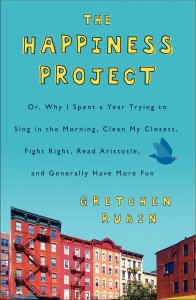
The Happiness Project
The Happiness Project describes one person’s year-long attempt to discover what leads to true contentment. Drawing at once on cutting-edge science, classical philosophy, and real-world applicability, Rubin has written an engaging, eminently relatable chronicle of transformation.
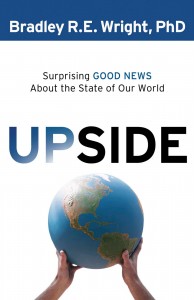
 

Upside: Surprising Good News about the State of our World
Did you know that global poverty has been cut in half over the last several decades? That infant deaths have decreased dramatically in recent years? That Christianity is a growing and influential force in Asia and Africa? Maybe the world isn’t in a downward spiral after all. In an age of pessimism, this book offers good news to Christian readers looking for glimpses of hope.


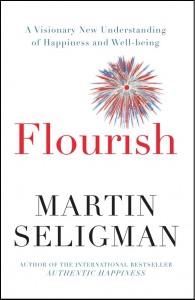
Flourish: A Visionary New Understanding of Happiness and Well-being
Flourish builds on Dr. Seligman’s game-changing work on optimism, motivation, and character to show how to get the most out of life, unveiling an electrifying new theory of what makes a good life—for individuals, for communities, and for nations.


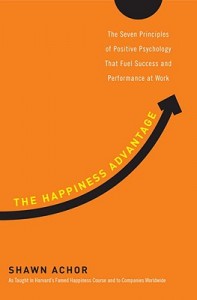
The Happiness Advantage
Conventional wisdom holds that if we work hard we will be more successful, and if we are more successful, then we’ll be happy. If we can just find that great job, win that next promotion, lose those five pounds, happiness will follow. But recent discoveries in the field of positive psychology have shown that this formula is actually backward: Happiness fuels success, not the other way around. When we are positive, our brains become more engaged, creative, motivated, energetic, resilient, and productive at work.


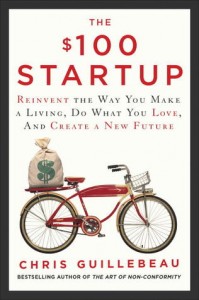
$100 Start-up: Reinvent the Way you Make a Living, Do What You Love, Create a New Future
Still in his early thirties, Chris is on the verge of completing a tour of every country on earth – he’s already visited more than 175 nations – and yet he’s never held a “real job” or earned a regular paycheck.  Rather, he has a special genius for turning ideas into income, and he uses what he earns both to support his life of adventure and to give back.


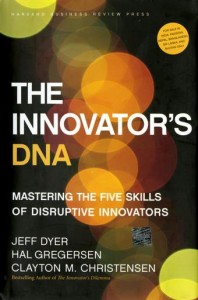
The Innovator’s DNA: Mastering the Five Skills of Disruptive Innovators
By identifying behaviors of the world’s best innovators—from leaders at Amazon and Apple to those at Google, Skype, and Virgin Group—the authors outline five discovery skills that distinguish innovative entrepreneurs and executives from ordinary managers: Associating, Questioning, Observing, Networking, and Experimenting.


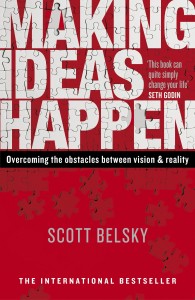
Making Ideas Happen: Overcoming the Obstacles Between Vision and Reality
As the founder and CEO of Behance, a company on a mission to empower and organize the creative world, Belsky has studied the habits of especially productive individuals and teams across industries. Now he has compiled the principles and techniques they share, and presents a systematic approach to creative organization and productivity.


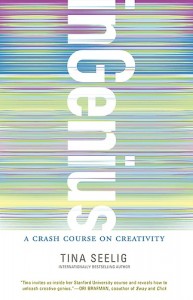
InGenius: A Crash Course on Creativity
Imaginative. Innovative. Ingenious. These words describe the visionaries we all respect and admire. And they can describe you, too. Contrary to common belief, creativity is not a gift some of us are born with. It is a skill that all of us can learn. International bestselling author and award-winning Stanford University educator Tina Seelig has worked with some of the business world’s best and brightest, who are now among the decision-makers at companies such as Google, Genentech, IBM, and Cisco. In inGenius she expertly demystifies creativity, offering a set of tools and guidelines that anyone can use.


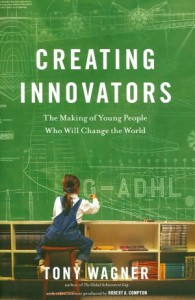
Creating Innovators: The Making of Young People who Will Change the World
In this groundbreaking book, education expert Tony Wagner provides a powerful rationale for developing an innovation-driven economy. He explores what parents, teachers, and employers must do to develop the capacities of young people to become innovators.


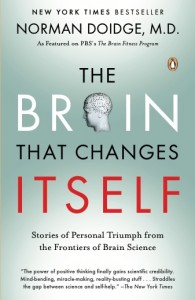
The Brain That Changes Itself: Stories of Personal Triumph from the Frontiers of Brain Science
An astonishing new science called “neuroplasticity” is overthrowing the centuries-old notion that the human brain is immutable. In this revolutionary look at the brain, psychiatrist and psychoanalyst Norman Doidge, M.D., provides an introduction to both the brilliant scientists championing neuroplasticity and the people whose lives they’ve transformed. From stroke patients learning to speak again to the remarkable case of a woman born with half a brain that rewired itself to work as a whole, The Brain That Changes Itself will permanently alter the way we look at our brains, human nature, and human potential.


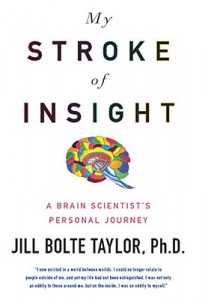
My Stroke of Insight: A Brain Scientist’s Personal Journey
On December 10, 1996, Jill Bolte Taylor, a thirty-seven- year-old Harvard-trained brain scientist experienced a massive stroke in the left hemisphere of her brain. For Taylor, her stroke was a blessing and a revelation. It taught her that by “stepping to the right” of our left brains, we can uncover feelings of well-being that are often sidelined by “brain chatter.” Reaching wide audiences through her talk at the Technology, Entertainment, Design (TED) conference and her appearance on Oprah’s online Soul Series, Taylor provides a valuable recovery guide for those touched by brain injury and an inspiring testimony that inner peace is accessible to anyone.


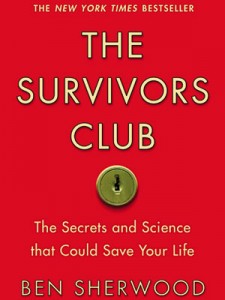
The Survivor’s Club: The Secrets and Science that Could Save your Life
Each second of the day, someone in America faces a crisis, whether it’s a car accident, violent crime, serious illness, or financial trouble. Given the inevitability of adversity, we all wonder: Who beats the odds and who surrenders? Why do some people bound back and others give up? How can I become the kind of person who survives and thrives? The fascinating, hopeful answers to these questions are found in THE SURVIVORS CLUB. In the tradition of Freakonomics and The Tipping Point, this book reveals the hidden side of survival by combining astonishing true stories, gripping scientific research, and the author’s adventures inside the U.S. military’s elite survival schools and the government’s airplane crash evacuation course.


Check out

You won’t finish this article: Why people online don’t read to the end
I’m sure this doesn’t apply to any of my readers.

Lawless Law
Painfully logical article from R.C. Sproul Jr.:”Jason Collins is the first male professional athlete to admit he mistreats men. For that he has received magazine covers, applause from the entire Good Morning American television crew, congratulatory phone calls from the first lady, and a thumbs up from her husband. Where, I am left wondering, was all this for the first male professional athlete to admit he mistreats dogs?”

Perhaps the Best Sports Video I’ve Ever Seen
I know many pastors like this too.

Shepherding a sick wife
Kyle Worley’s wife has Cystic Fybrosis. Beautiful picture of Christ and His church.

The Ultimate Kinsman Redeemer
Stephanie Van Eyk: “It is as if the compliers of the Hebrew Bible placed the book of Ruth directly after Proverbs to describe the marriage between the wise man and the virtuous woman.”

Why is it so hard to do business in America?
With two budding entrepreneurs in my family, I’ve been stunned at the difficulties of setting up the simplest business in the USA.