Children’s Bible Reading Plan (46)

Here’s this week’s morning and evening reading plan in Word and pdf.

Here’s this week’s single reading plan for morning or evening in Word and pdf.

And for those who want to start at the beginning, here’s six months of the morning and evening in pdf, and here’s six months of the single reading plan in pdf.


Pastoral Picks (8/28)

The annual Puritan Reformed Theological Seminary conference started yesterday and continues until Saturday. The subject is “The Beauty and Glory of the Holy Spirit,” and you can follow by live webcast here. Staying with the seminary, Steve McCoy has a nice plug for the Puritan Reformed Journal. You can subscribe here.

I’ve been privileged to get to know Pastor Al Martin since he moved near to Grand Rapids a couple of years ago. From the little he’s shared with me on the subject, I’m sure his new book about the lessons he learned from the death of his first wife will be well worth reading for anyone going through the experience of having lost a loved one who died in Christ.

Tim Challies put me on to this post on moving towards noteless preaching.

Joe Rigney at Desiring God has some helpful material from Jonathan Edwards on preaching Christ from the Old Testament.

As someone who has experienced too many of the negatives of Presbyterianism, this is a refreshing post from James Faris on the benefits of being in a presbytery.

Bob Kellemen’s six part series on The Law and Church counseling is required reading for anyone involved in counseling ministry.

Jeremy Walker has a delightful post full of quotes from The Inimitable Mr Delves. Who’s he? Read and find out.

If you are interested in ministering to the disabled, may I highly recommend John Knight’s blog, The Works of God. Here’s a video John put together recently.


7 easy steps to much faster sermon prep

I read this post about Seven easy steps to much faster writing and immediately saw the obvious transferability to preaching.

Speedometer

Before you go and read it  though, let me say that our motive should not be so much about preparing our sermons faster, but rather more efficiently. In some ways some of us need to slow down sermon preparation – to give time for prayer, meditation, and also divine promptings.

So my approval of these principles is not so much about getting out of the study quicker, but about using time in the study better – freeing up time for the deeper and more spiritual dimensions of sermon preparation. With that caveat in place, here are Ali’s main points with my summaries:

  1. Find your best writing time: Not all hours are equal. Find out when you are most productive.
  2. Minimize the risk of interruptions: Turn phone off. I repeat, turn phone off.
  3. Cut out distractions: Turn email off. I repeat, turn email off.
  4. Write an outline: Get this as early as possible in the process.
  5. Set a timer: Focuses and concentrates the mind
  6. Start wherever you want: Just get going – beginning, middle, or end. Wherever you have some thoughts, start there.
  7. Don’t edit while you write: Don’t keep stopping to craft the perfect sentence. Write lots….then edit.

Read the whole article here. It could save you (or free up) a lot of time.


What’s the difference between Islamic and Christian extremists?

What’s the difference between Islamic extremists and Christian extremists?

Picture of Extremist

Islamic extremists take something false and go so far with it that they damage themselves and others.

Christian extremists (and I find myself among them at times) take something true and go so far with it that they can also end up damaging themselves and others (NB. though, of course, never with such evil motivations nor such deadly consequences).

And most of us have this tendency to extremism. Let me give you some examples of what I mean:

1. Nouthetic counseling: Jay Adams identified the problem of so many sinful behaviors being psychologized away. His solution was nouthetic counseling, a counseling methodology that confronted people with their sin and called them to change. But some took this truth to such an extreme that everything became sin and all psychology and physical dimensions to problems were dismissed or even demonized. (Confession time: I’ve got a tendency to react to that extreme by going to the other!)

2. Redemptive-historical preaching: Advocates of this kind of preaching identified the problem of “practical” or “topical” preaching which tended to preach purely applicatory sermons from small bits of Scripture without connecting it to the original context or the larger picture. Their remedy connects every text with the broad sweep of redemptive history. But does every sermon on every kind of biblical literature need to follow this pattern? Is breadth always better than depth? Is practical application never to be the main emphasis of the sermon?

3. Consecutive expository preaching: I referred to the pros and cons of this increasingly popular preaching model yesterday. Again, it identifies a problem, and proposes a good solution. But it can create another problem if it is taken to the extreme of making every sermon conform to this pattern.

4. Christian hedonism: There’s no question that John Piper has been used of God to recover a vital truth for the church. (His book, The Pleasures of God, revolutionized my own ministry about 10 years ago.) But problems arise when that truth becomes the only truth, or the main truth. Interestingly, Piper has since published two extremely helpful books, When I don’t desire God and When the darkness won’t lift, both of which bring a much greater balance to his important message.

5. Gospel-centeredness: I’ve expressed some concerns about this before (Less Gospel, More Christ please). Dane Ortland helped me understand the context of this movement better in a comment to that post and also here. However, again, the danger is that in a well-motivated desire to move away from moralism, even away from a Christ-as-example moralism, we lose Christ and Christ-empowered morality. Joe Thorn put it well:

There is more in God’s word than the gospel. God has given us his law to show us the way, uncover our corruption and condemnation, and point us to our need of redemption. There are commands to be obeyed, there is wisdom to learn and practice, and affections to feel and be moved by. But, the law itself is unable to create within us new hearts, or empower us to obey its demands. So let me say it this way: The gospel is the main thing, it is not the only thing. However, it is the only thing that brings life, power, and transformation. The gospel isn’t everything, but it does connect to everything, and preachers and teachers in the church must be able to show that connection lest we allow the church to drift (or even be lead) into various kinds of hopeless, powerless legalism.

6. Indicatives v Imperatives: This is related to #5. Yes, there has been too much “imperative-style” preaching, especially imperative-style preaching (you do this) that’s not rooted in the indicative (Christ has done it). However, as Kevin DeYoung has warned, although unintended, an over-emphasis on the indicatives may result in us losing the moral imperatives altogether, and in leaving people with only the duty to believe rather than to “trust and obey” as the old chorus goes.

7. Family Integrated Church: It’s great that so many leaders and churches are moving away from separate church services for different age groups, and the multiplying of ministries tailored to different ages that split churches into so many age-segregated cells. However, in the commendable desire to unite families and churches, is there not a danger of going to the extreme of having no age-appropriate teaching and activities?

8. The Full-quiver Movement: Again, it’s wonderful that Christians are swimming against the current of the age in fulfilling the creation mandate to be fruitful and multiply above 2.3 children. However, there’s another side to that mandate that is often forgotten: “Subdue, have dominion, and rule.” But, in the worthy desire to fill the earth, some are physically, intellectually, and emotionally unable to provide for their families and have a controlled, disciplined, and orderly home and family life.

 9. Technology: I’m so glad that I’m living through the digital revolution. I’m so enthusiastic about how Christians are using technology to reach out with the Gospel via blogs, videos, mp3′s, etc. However, in our enthusiasm for this good gift of God, we are prone to trust in technology rather than the Holy Spirit, to substitute Facebook for face-to-face, and to have more fellowship in Twitter than in the local church.

10. Personalities: Again, I’m so thankful to have such unprecedented daily access to the blogging, tweeting, writing and preaching ministries of well-known Christian teachers. But our extremist hearts so easily and quickly turn them into Popes and substitute them for our Pastors.

All these things are good things; but if carried too far (often done more by the followers than the leaders), they carry us over the cliff to our hurt (and others).

As I’ve got my own extremist tendencies, especially in the things I’m most passionate about (maybe even in this post?), I want to keep praying: “Lord, I am such an extremist. I can take true things and good things, and take them so far that I end up turning them into falsehoods and sins. Please save me from my extremist heart; help me to live a life of biblical balance; and help me to stop running off the cliff with good and true things in my hand.”


Don’t spiritualize your management problems: Fix them!

In this post Maurilio Amorim argues that way too many churches and Christian ministries blame God or Satan for mismanagement rather than take right and decisive action.

Problems

Maurilio says:

Borrowing more money than you should, hiring the wrong person for the job, mismanaging people, failing to do due diligence on a deal, are not spiritual issues. They are management and leadership problems.

We don’t need to pray about firing an employee who has stolen from the organization, but leaders often agonize about letting people go who don’t perform, are not loyal, and who steal from the ministry by constantly robbing everyone by their lack of contribution or negative attitude. There’s a big difference between being ruthless and uncaring and being passive, fearful or disengaged.

But it’s not just churches, ministries, or companies that do this, is it! We’re all prone to this over-spiritualization of problems in our personal and family lives too.

And, in fact, I’d have to disagree with Maurilio that “these are not spiritual issues. They are management and leadership problems.”

They are definitely management and leadership problems. But they are also reveal deeper spiritual problems. What such fearful and fatalistic passivity reveals is a lack of true spirituality.  And a lack of true prayer.


Pros and cons of consecutive expository preaching

Consecutive expository preaching has become vogue in many churches. I come from a background where it was not so common. In the Scottish Highlands, pastors tended to preach what the Lord “laid on their hearts and minds” each week. They were definitely expository sermons, yes, but they were not part of a months-long-series of sermons on one book, verse-by-verse and chapter-by-chapter. If one such series was being preached in, say, the morning service, usually the pastor would use the other sermon to preach on texts that had captivated or burdened him in the previous week. But the idea of having two long series (or even three if you include the midweek) running at the same time was rare and even frowned upon as “quenching the Spirit!”

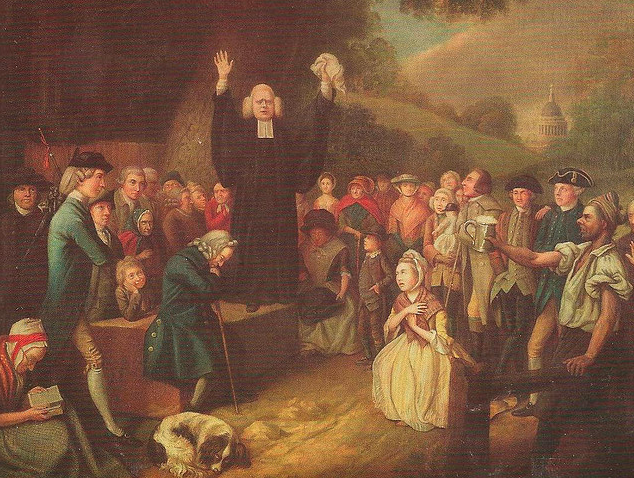
George Whitefield

George Whitefield preaching outside

However, since coming to the USA, I’ve come to appreciate that there are significant advantages to this increasingly popular method of consecutive preaching:

  • The pastor and congregation are ‘stretched’ to preach on and hear about subjects that would not be normally chosen;
  • The preacher and hearers are immersed in one book of the Bible for many weeks and months;
  • It helps to keep passages in context;
  • It teaches people how to read and study their Bibles;
  • It provides a balanced diet and prevents pastors from sticking to their ‘hobby horses’;
  • The pastor does not need to agonize over his choice of text each week;
  • There does not need to be so much introduction and background given each week;
  • The overall argument or narrative of the book is better grasped and understood;
  • It helps people to see the overall plan of Scripture;
  • It encourages people to prepare ahead by reading and thinking about the passage;
  • It emphasizes the centrality and authority of Scripture.

Yes, many advantages, but let me now give you some tips on how to avoid the potential downsides:

  • Ensure that each sermon is complete in itself, rather than finishing this week what you didn’t finish last week;
  • The portion of Scripture for each sermon should not be too few verses, so that the series goes on too long, or too many, so that the preaching becomes shallow and superficial;
  • There should be a memorable theme and points for each sermon rather than simply making it a running commentary;
  • It may be helpful to read a related passage of Scripture rather than the same portion every week for many weeks;
  • Prayerfully consider the need for variation. For example, a series on a Pauline Epistle might be followed by a Gospel or an Old Testament narrative book;
  • Break the series from time to time to provide a change. Sometimes it may be wise to take a break for a few weeks or even months before returning to it;
  • Be prepared to preach on a text the Lord ‘lays on your heart’ even if it breaks the sermon series. Remain “open” to God’s direction each week.
  • Be conscious of your limitations. Few preachers can sustain their congregation’s interest in a long series of consecutive expository sermons, especially if two or more series are going on at the same time;
  • Before finally deciding to start a series, read the book through a few times and begin to map out preaching portions. This will also help you to decide if this is the right book and if your own gifts will stretch enough to take it on;
  • As starting a series is a major decision that will set the course of the congregation for a while, it may be wise to consult with some carefully chosen elders or mature Christians;
  • Try to avoid becoming a mere teacher or lecturer rather than a preacher;
  • There is no need for a long recap at the beginning of every sermon.
  • Remember to preach evangelistically to the lost before you, rather than just to build up the Christians in the congregation;

With these caveats in mind, I hope we will be better able to avoid some of the disadvantages of consecutive expository preaching, and use its advantages for the greater glory of God and the good of sinners.

More preaching tips like this in How Sermons Work.